

The most profitable franchises to own in 2026 share a business model more than they share an industry. Lean staffing, modest real estate, repeat customers and the ability to add territories matter more than the logo on the sign.
Two companion guides go deeper on these numbers: see highest ROI franchises for how payback period changes the ranking, and franchise profit margins for how royalties, labor and rent shape what reaches the owner.
That’s why this guide ranks franchise types, not brands. For each category you’ll see what drives profit, what erodes it, and how involved the owner usually needs to be.
You won’t find earnings figures for individual brands here. Those belong in each franchisor’s Franchise Disclosure Document, and the last section shows you how to read them. I’m happy to go through them with you on a call.
In this post:
Two companion guides go deeper on the numbers behind this list: see highest ROI franchises for how payback period changes the ranking, and franchise profit margins for how royalties, labor and rent shape what actually reaches the owner.
- Does owning a franchise make you rich?
- What actually drives franchise profit
- The most profitable types of franchises, compared
- How to find the real numbers in Item 19
Does Owning a Franchise Make You Rich?
Owning a franchise can build real wealth over time, but it isn’t a guarantee. Results depend on the business model, your market, how much you invest and how well you run it. Franchise ownership is closer to running a disciplined small business than to holding a passive investment.
The success of a franchise comes down to a few things you control: the model you choose, the territory you open in, and how closely you manage people, marketing and costs.
A strong brand and proven systems help, but they don’t remove the work. Rent, payroll, royalties and cost of goods can absorb healthy sales if nobody is watching them. For a closer look at how owners get paid, see how franchise owners pay themselves.
What Actually Drives Franchise Profit
Sales alone tell you very little. Two franchises with the same sales can leave their owners with very different results, because their cost structures differ. Five factors explain most of the gap.
1. Labor needs
Payroll is the largest controllable cost in most franchises. Models that run with a small team, or where staff time is billed directly to customers, keep more of each sale than models that need a full crew on every shift.
2. Real estate
A home-based or small-office business carries little fixed cost. A retail site on a busy corner carries rent, build-out and equipment before the first customer arrives. Higher fixed costs raise the amount you need to sell before you earn anything.
3. Recurring revenue
Memberships, service contracts and repeat clients make income predictable and lower the cost of finding customers. One-time jobs mean you start each month close to zero.
4. Scalability
Some models let one owner add territories or units with the same management team. Others depend on the owner’s own time, which caps growth.
5. Owner involvement
A semi-absentee model needs a manager you can trust and enough margin to pay them. A full-time owner-operator model saves that salary but takes your week. Neither is better; they suit different people. See what’s realistic for passive franchise income.
Financing matters too. How you approach financing a franchise investment changes your monthly obligations and your return on investment.
The Most Profitable Types of Franchises, Compared
The table below compares ten franchise categories on the factors that drive profit. The order reflects how many of those factors work in the owner’s favor, not an earnings ranking. System size shows how large an example brand is. It is a measure of scale only and says nothing about what an individual owner earns.
| Category | Example brand and system size | Staffing | Real estate | Revenue pattern | Owner involvement |
|---|---|---|---|---|---|
| Home services | SERVPRO: 2,400+ franchises (2026) | Small crews | Small office or warehouse | Mix of one-time jobs and referrals | Full-time, or manager-run at scale |
| Senior care | Visiting Angels: 600+ locations (Aug 2026) | Large caregiver team | Small office | Recurring client hours | Full-time at launch, manager-run later |
| B2B services | Express Employment Professionals: 850+ locations (end of 2025) | Small office team | Small office or home-based | Recurring contracts | Full-time, sales-led |
| Fitness and wellness | Planet Fitness: 2,930 clubs (June 30, 2026) | Moderate | Large retail space | Recurring memberships | Often semi-absentee with a manager |
| Cleaning | — | Large hourly team | Small office | Recurring contracts | Full-time or manager-run |
| Auto services | — | Skilled technicians | Service bays | Repeat maintenance | Full-time or manager-run |
| Car wash | Tommy’s Express: 270+ locations (Jan 2026) | Low | Large site, high build cost | Memberships plus single washes | Often semi-absentee |
| Laundromat | — | Very low | Retail space, heavy equipment | Repeat local customers | Often semi-absentee |
| Real estate and property services | — | Low to moderate | Small office | Mix of fees and recurring management | Full-time, relationship-led |
| Quick-service food | McDonald’s: 45,356 restaurants worldwide (Dec 31, 2025) | High, multiple shifts | Prime retail site | High-volume, one-time sales | Full-time or multi-unit operator |
Unit counts come from each company’s own filings and announcements as of the dates shown. Brands are named as examples of scale. Naming a brand is not a recommendation, and it doesn’t mean FranchiseCoach represents that brand.
I can’t publish brand earnings here, but I can walk you through them. On a call, I’ll go through the disclosure documents for franchises that fit your budget, including what each one reports in Item 19. Book a time.
1. Home Services
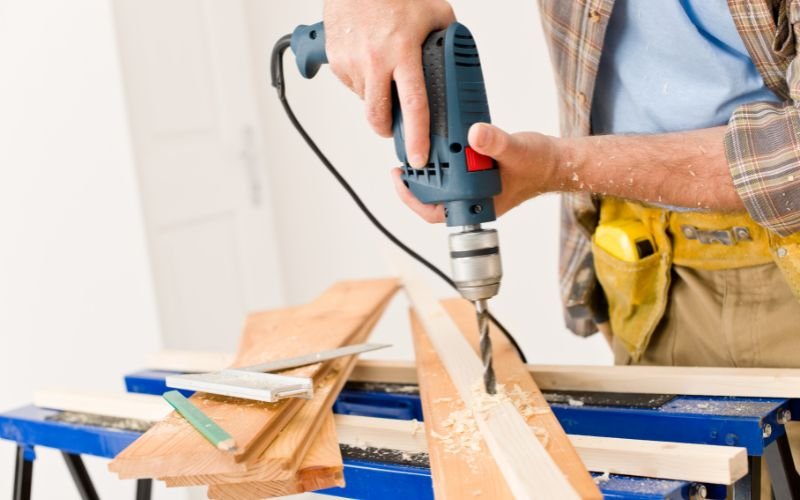
Home services cover repair, remodeling, restoration and maintenance. Most run from a small office or warehouse with a few crews, so fixed costs stay low. Demand holds up in most economies because a leaking roof or a flooded basement can’t wait.
What drives profit: crew utilization, job pricing, and how well you turn one-time jobs into referrals and repeat work. What erodes it: technician turnover and the cost of generating leads.
Scale example: SERVPRO reports more than 2,400 franchises (2026).
2. Senior Care
Senior care franchises provide non-medical help at home, and owners don’t need a healthcare background. Clients usually book weekly hours for months or years, which makes revenue recurring. An aging population keeps demand growing.
What drives profit: client retention and the gap between billing rates and caregiver wages. What erodes it: caregiver recruiting and turnover, which is the main management job in this category.
Scale example: Visiting Angels reports more than 600 locations (August 2026).

3. B2B Services
This group includes staffing, bookkeeping, digital marketing, IT support and business consulting. Most need only a small office or none at all, and clients pay on contract. Business customers also tend to stay longer than consumers.
What drives profit: recurring contracts and low overhead. What erodes it: a long sales cycle. These are sales-led businesses, so they suit owners who are comfortable building relationships with other business owners.
Scale example: Express Employment Professionals reports more than 850 franchise locations worldwide (end of 2025).
Exploring franchises with $50K+ to invest?
4. Fitness and Wellness
Fitness and wellness concepts run on memberships, so revenue recurs each month. Formats range from large gyms to boutique fitness studios. Many are designed for a manager to run day to day.
What drives profit: member count relative to fixed costs. Once rent and staff are covered, each added member costs little to serve. What erodes it: a high build-out cost, a long lease, and member churn.
Scale example: Planet Fitness reported 2,930 clubs system-wide as of June 30, 2026.

5. Cleaning
Cleaning franchises split into commercial and residential lines. Commercial work is usually under contract, and residential clients often book on a regular schedule. Equipment and office needs are light.
What drives profit: route density and contract retention. What erodes it: hourly labor. This is a people-management business, and results follow how well you hire, train and keep staff.
6. Auto Services
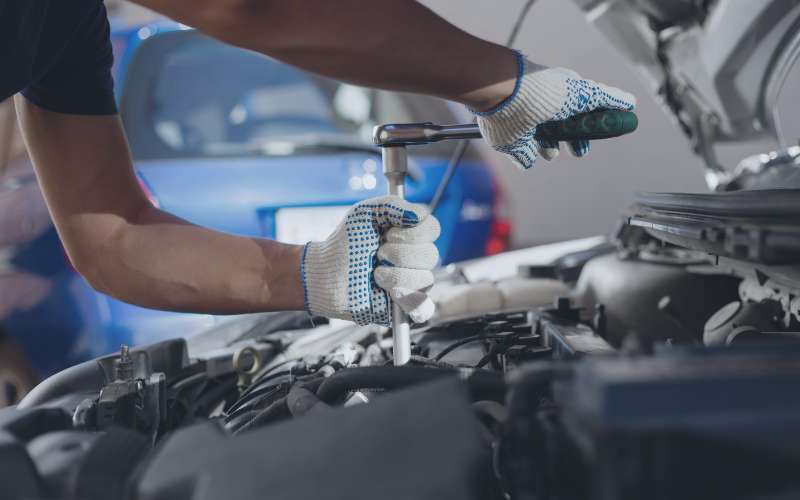
Auto repair and maintenance franchises serve a need drivers can’t put off for long. Labor is billed by the hour, and customers return for routine maintenance.
What drives profit: technician productivity, parts pricing and repeat visits. What erodes it: the cost of bays and equipment, and a shortage of skilled technicians in many markets.
7. Car Wash
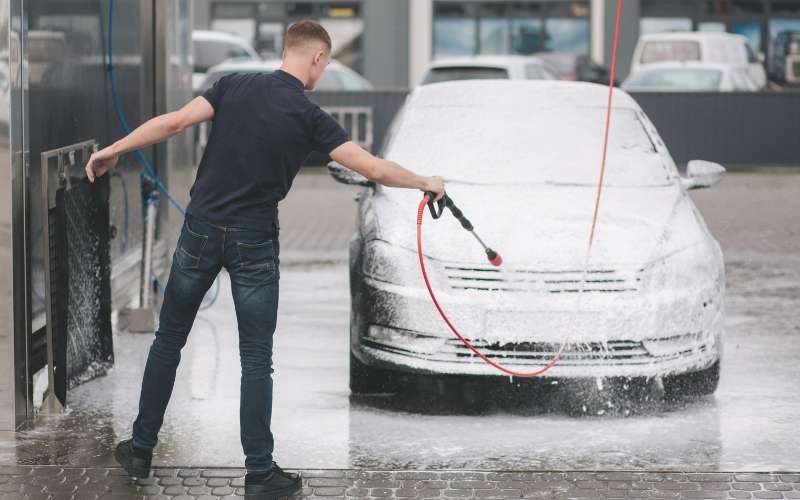
Express car washes run with few employees, and monthly wash memberships have added recurring revenue to what used to be a one-time sale.
What drives profit: traffic volume and membership sign-ups against a largely fixed cost base. What erodes it: a very high cost for land, building and equipment, plus weather and nearby competition. Site selection decides most of the outcome.
Scale example: Tommy’s Express reports more than 270 franchise locations (January 2026).
8. Laundromat
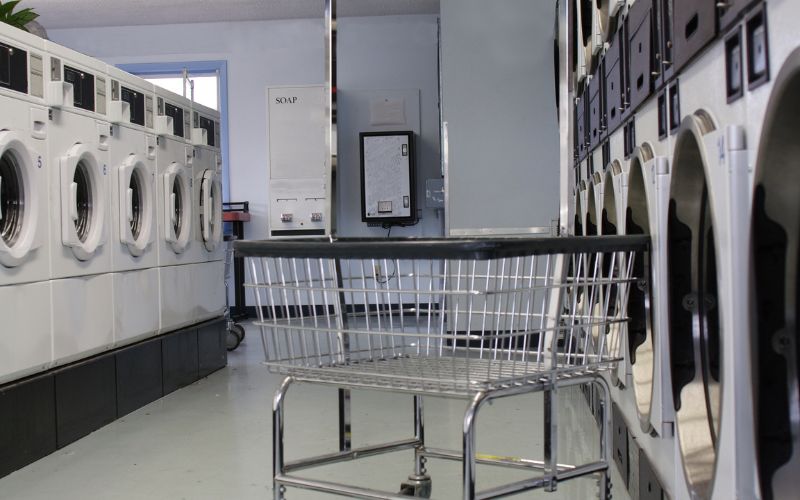
Laundromat franchises need very little staff, and customers in the neighborhood return every week. Many newer concepts use app and card payments and add wash-and-fold services.
What drives profit: machine utilization and low labor. What erodes it: equipment cost, utilities and the lease. Like car washes, the location does most of the work.
9. Real Estate and Property Services
This category covers brokerage, property management and home inspection. Overhead is low, and property management adds recurring monthly fees.
What drives profit: the number of productive agents or managed properties you can support from one office. What erodes it: dependence on the local housing cycle and on your own network.

10. Quick-Service Food
Quick-service restaurants are the most familiar franchises and some of the largest systems in the world. They can produce very high sales volume from a single site.
What drives profit: volume, tight control of food and labor costs, and owning several units. What erodes it: food cost, staffing across long hours, and expensive real estate. High sales don’t always mean high owner income, which is why this category sits last on a list about profit drivers.
Scale example: McDonald’s reported 45,356 restaurants worldwide as of December 31, 2025, with about 96% franchised.
How to Find the Real Numbers: Reading Item 19
Franchisors can only share earnings information with prospective buyers through Item 19 of the Franchise Disclosure Document (FDD). That’s where the real numbers live.
What Item 19 is
Item 19 is the financial performance representation. It’s optional. Some franchisors include detailed sales and cost data for existing units, some include sales only, and some include nothing. If a franchisor leaves it blank, its salespeople aren’t allowed to give you earnings figures another way.
What to check when you read it
- Which units are included. All units, or only the top performers, or only those open more than a year?
- Sales or profit. Many Item 19s show gross sales only. Sales are not income.
- Average or median. A few strong units can pull an average up. The median tells you what the typical owner saw.
- Which costs are missing. Look for rent, labor, royalties, marketing fund fees, debt payments and an owner’s salary.
- How old the data is, and whether the units resemble the market you’d open in.
Other items to read alongside it
- Items 5 and 6: initial and ongoing fees.
- Item 7: the estimated initial investment.
- Item 20: units opened, closed and transferred, plus contact details for current and former franchisees.
- Item 21: the franchisor’s own financial statements.
Questions to ask existing owners
Item 20 gives you a list of owners to call. Talking with franchisees is the best check on anything in the document. Ask them:
- How long did it take to cover your costs each month?
- How do your results compare with Item 19?
- What costs surprised you?
- How many hours a week do you work in the business?
- Would you buy this franchise again?
Then build your own estimate with your rent, your wages and your loan payments. An accountant or franchise attorney can check it before you sign.
I can’t publish brand earnings here, but I can walk you through them. On a call, I’ll go through the disclosure documents for franchises that fit your budget, including what each one reports in Item 19. Book a time.
Ready to find the franchise that fits you?
Frequently asked questions
There isn’t one answer. The models that tend to leave owners with the most share a few traits: a small team, modest real estate, repeat customers and room to add territories. Home services, senior care and B2B services often fit that description. The right one depends on your budget, skills and how involved you want to be.
It can build real wealth over time, but it isn’t a guarantee. Results depend on the model, the market, your investment and how well you manage the business. Treat it as running a small business, not as a passive investment.
Read Item 19 of that brand’s Franchise Disclosure Document, then call the current and former owners listed in Item 20. Franchisors aren’t allowed to give you earnings figures outside Item 19, so be cautious about any number that doesn’t come from the document.
Earnings claims about specific franchises are regulated, and published figures are easy to misread without the full disclosure document. So this guide compares business models, and I go through the actual documents with you on a call.
Not necessarily. A large unit count shows that a brand has scaled and is widely recognized. It doesn’t tell you what an individual owner earns. Use Item 19 and conversations with owners for that.
Models with simple operations and a manager on site, such as fitness clubs, car washes and laundromats, are most often run this way. Service businesses can get there once a general manager is in place. Expect to be closely involved in the first year whatever the model.
It varies by model. Businesses with low fixed costs can cover their monthly expenses sooner, and those with a large build-out usually take longer. Ask existing owners how long it took them, and keep enough working capital to cover the ramp-up.
Find the Franchise Model That Fits You
The most profitable franchise on paper isn’t automatically the right one for you. What matters is how a model’s costs, staffing and time demands line up with your capital, your experience and the life you want.
Adam Goldman and the FranchiseCoach team help prospective owners compare models, review the FDD and talk with existing franchisees before signing anything. I can’t publish brand earnings here, but I’ll walk you through the disclosure documents for franchises that fit your budget on a call. Book a time.