
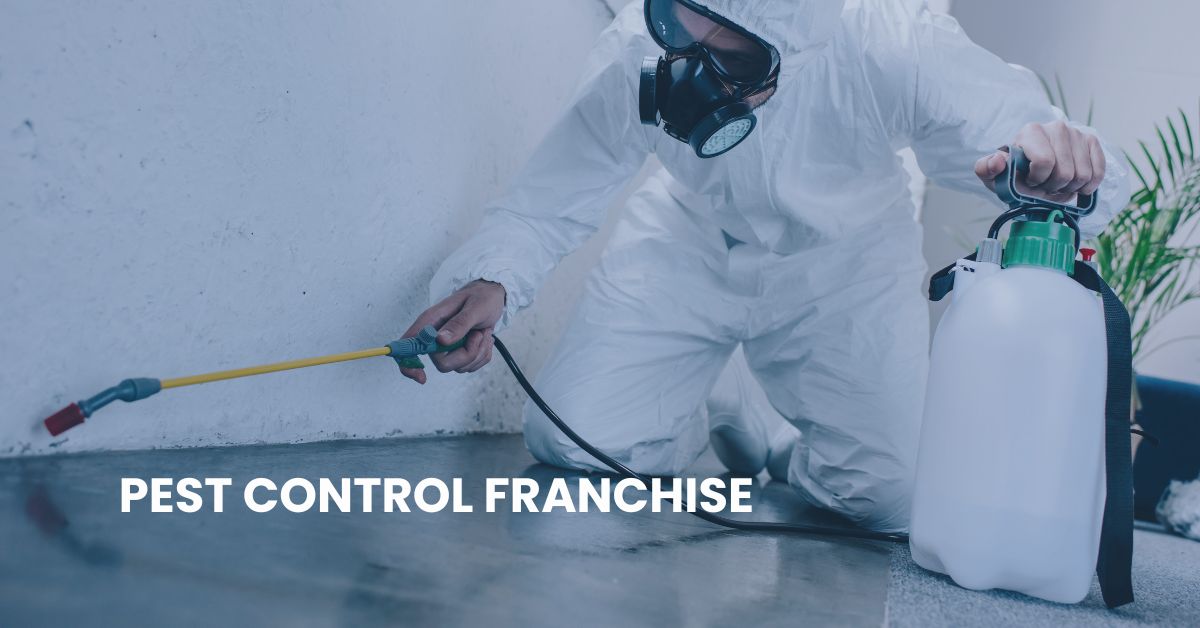
The pest control industry is a year-round demand that exists from homeowners & businesses for pest infestation removal services, including mosquitoes, termites, rodents, ticks, wildlife, etc. A pest control franchise provides investors with a proven business model, recurring revenue, and entry to a service category that has steady demand.
Independent pest control businesses can be started; however, many entrepreneurs prefer starting a franchise business in pest control as it offers an established brand, systems to follow, training, and technology for service delivery and marketing support.
That makes it easier for franchise owners to deliver residential & commercial services while building a scalable, profitable business.
This guide will discuss what makes a pest control franchise attractive, the key factors to evaluate before investing in any opportunity, and leading franchises currently shaping this industry in 2026.
Additionally, learn how to evaluate different brands based on your goals, budget, and target market, and review the franchise disclosure document to identify the right opportunity.
Critical Factors Before Investing
The “Annuity” of Pest Control: Recurring Revenue
The majority of pest control businesses have recurring revenue through their contracts with homeowners and businesses.
Most pest control companies rely on service agreements and subscription-style plans, which provide more predictable cash flow than one-time jobs.
Common revenue drivers include:
- General pest control services for ants, spiders, roaches, and rodents
- Mosquito and tick control services for outdoor living spaces
- Termite control for long-term structural protection
- Wildlife control and critter control for nuisance animal issues
Subscriptions are common among all types of pest control franchises, providing the franchisee with steady, predictable monthly income and several sources of additional income.
Deciphering the Initial Investment
Typically, a control franchise within this category will require you to spend somewhere between $50,000 and $200,000 as an initial investment.
Explore our blog “8 Franchise Business Ideas Worth to Start” to discover other franchise opportunities worth considering before making your decision.
It is based on your territorial size, the type of equipment and vehicles that are required for your business, and what kind of services you plan to provide.
You need to take the time to thoroughly read the Franchise Disclosure Document before investing. Your FDD is going to outline all of the startup costs associated with the franchisor, including fees, agreements, and territorial rights.
Additionally, your FDD may include information related to the performance of other locations if available.
You need to consider your ongoing royalties that typically run anywhere from 3.5% to 10% of gross sales for most franchises in this industry.
Competitive Franchise Models for 2026
The pest management space includes several business models, each with different service mixes and customer needs.
1. General Pest Management (GPM)

This is the largest of all pest control business models, with the most variety of general household and commercial pest types.
The target buyer can be either an investor looking at a large customer base of residential and commercial accounts or a new owner wanting to provide an easy-to-market year-round service.
It is a good example of what is considered a “core” general pest control service that will always have a high level of demand.
Both residential and commercial customers will purchase from this type of operation.
- Covers general pest control service, which will be in demand
- Can be used to service residential customers or commercial accounts
- The recurring general pest control service plans provide predictable revenue streams
- Allows for the largest client base of all the franchise opportunities
- Perfect fit for investors seeking a scalable, proven business model
2. Mosquito & Vector Control
The focus of this niche is on the treatment of outdoor areas for mosquitoes and ticks, which may be a particularly attractive option in suburban or high-humidity regions.
Brands that fall under this category include Mosquito Joe, Mosquito Shield, and Mosquito Mike.
Mosquito Joe has been established as the largest and most rapidly growing outdoor pest control company in all of North America, operating from over 400 locations.
- Focused on mosquito control and tick control services for outdoor spaces.
- Utilizes less complex service routes and lighter equipment needs compared to other franchises within this industry.
- Attracts homeowners who are interested in protecting their patios, lawns, and family living spaces from pests.
- Generally produces a high volume of repeat business in peak season months/years.
- Mosquito Shield is differentiated by its customer retention rate exceeding 90%.
3. Termite & Structural Protection
Termite control has an even narrower niche within the pest control services. It often demands a higher degree of technical proficiency and licensure.
Therefore, it will be much easier to develop a large number of higher-priced repeatable services through the sale of subsequent inspections or additional services.
- Focuses on termite inspection and treatment; renewal of warranty and structural protection
- Requires more extensive and technical (tools/compliance) training and experience
- Delivers a significantly higher price point than general pest control services.
- Creates long-term relationships by offering a warranty that will provide long-term income streams to continue inspecting the property
- Good alternative for customers looking for a more advanced, technically-oriented, "high trust" type service.
4. Diversified Home Services
Some franchises combine pest control services with other types of residential services (such as lawn and tree care) in order to increase their customer base and generate new revenue streams.
A good example is Lawn Doctor, which offers both lawn service and pest control. This allows the franchisee to offer one-stop shopping and therefore be able to sell additional services to an existing client.
- Pest control can be combined with other types of home services
- Increases potential sales by offering multiple services to each customer
- Provides the ability for franchisees to support their customers' changing seasonal needs
- May include lawn treatments, tree care, and vegetation management services.
- Ideal for those looking for a multifaceted business model
Comparison of Pest Control Verticals
When evaluating pest control franchises, you must evaluate them using these factors:
- service complexity
- licensing requirements
- route density
- seasonal demand
- whether or not you can service both commercial and residential customers
- the ability to upsell with other services
Due Diligence: Beyond the Sales Pitch
Research the business model before you commit to an investment by looking past the sales pitches for proof of the business model in operation.
Key questions to ask:
- Does the franchisor offer a complete training program with ongoing training for franchisees?
- What kind of marketing support and lead generation does the franchisor provide to franchisees?
- What technology is included for scheduling, billing, and route planning?
- Are territories protected?
- How strong are franchisee satisfaction rates and retention levels?
Technology can make a big difference. Route optimization software and customer management systems are essential tools for running a modern pest control franchise efficiently.
The same goes for Training. The best systems offer comprehensive training, operational support, and resources that help owners build expertise, identify customer needs, and improve customer communication.
FAQs
Yes, often. When it comes to pest control, we address health issues, protect properties and improve quality of life. So that’s why this is a stable market for most businesses.
No-typically. Many brands provide a comprehensive training program for new franchisees, plus ongoing training as the business grows.
Strong brand recognition, operational systems, support, and retention. A good example is mosquito shield. They have a retention rate with customers over 90%. That is due to the fact that they make sure to satisfy every single one of them.
You can anticipate the initial investment (franchise fee + equipment + marketing + set up) for a pest control franchise to range from $50,000 to more than $600,000.
Final Thoughts: Selecting Your Path
Your ideal pest control franchise will be based on what your objectives are, how much money is available, and what type of services you wish to offer. Some investors want a national brand that is one of the most recognizable names in the home service franchise industry.
Others want flexible franchising offers, a lean operating model, or a path to becoming their own boss in a local community.
Whether it is evaluating a Truly Nolen franchise, an investment in a Truly Nolen franchisee (Pestmaster Services), Mosquito Shield, Mosquito Mike, Lawn Doctor, or other new names, such as Clear Pest Pros.
The key point is always to evaluate the basics, training, support, technology, demand from customers, and how strong the business model is.
Are you ready to jump into franchising? Contact a franchise consultant today to compare top pest control franchise opportunities, review FDD, and find the right business model for your goals, budget, and market.