
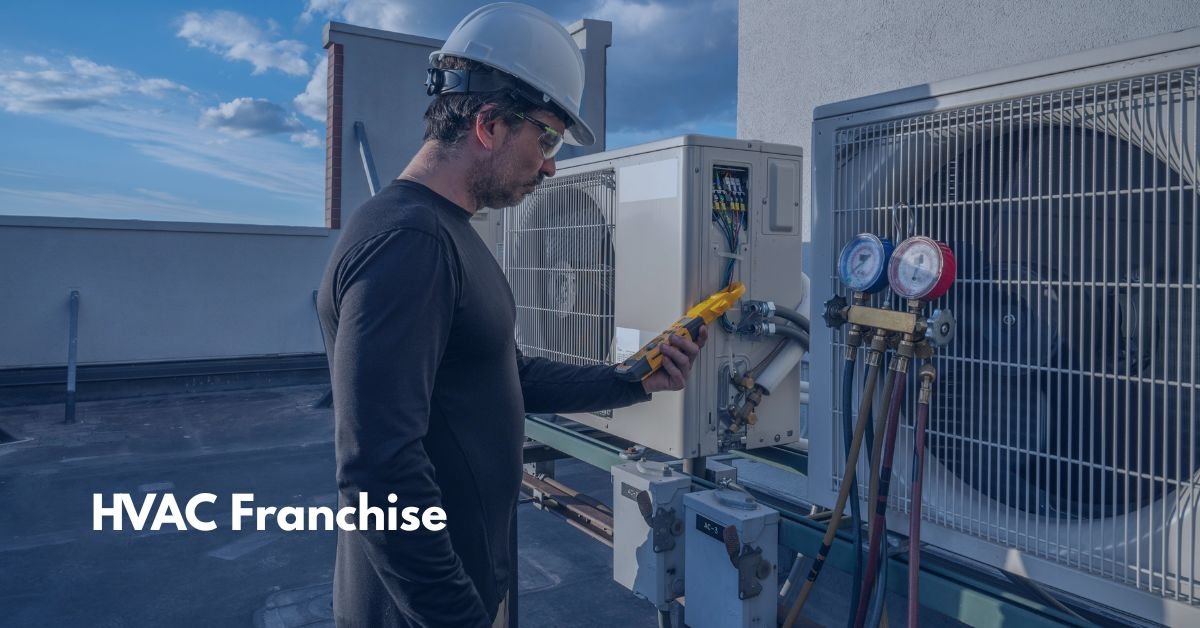
An HVAC franchise lets you own a heating and cooling business backed by an established brand’s systems, training, and marketing. Most brands don’t require you to be a technician. You run the company as the owner while licensed HVAC technicians handle the service calls.
Startup costs vary widely. Industry estimates put the total at $100,000 to $700,000 or more, depending on the brand and territory. Before you buy, confirm three things: the capital requirements, the fine print in the franchise disclosure document, and your plan to hire qualified technicians.
What an HVAC Franchise Costs
Cost comes in three layers. There is the upfront investment, the ongoing fees, and the capital the franchisor wants to see before approving you.
Look at all three. The initial franchise fee alone tells you very little.
Initial Franchise Fee and Total Investment
The franchise fee is only part of your initial investment. The total also covers vehicles, tools needed for the trade, insurance, training travel, launch marketing, and working capital.
Here is what each brand’s published materials or listings show. These are pulled from search snippets, so confirm every figure in the current FDD.
| Brand | Published initial investment | Source |
|---|---|---|
| Aire Serv | $113,808.50 to $271,708.50 (includes $45,000 franchise fee) | Neighborly |
| One Hour Heating & Air Conditioning | $143,273 to $286,702 | One Hour |
| Ductz | $83,950 to $197,300 | Top Franchise |
Other industry sources quote wider ranges. Housecall Pro puts HVAC franchise startup costs at $100,000 to $700,000 or more, depending on brand and territory.
Startup Costs People Forget
The published range rarely captures everything. Several costs catch new owners off guard.
Service vans and wraps are a big one. So are diagnostic equipment, field service software, and state contractor licensing. Insurance for HVAC work can be significant because technicians work inside customers’ homes.
Then there is your own salary. Most new owners take little or no pay at first. Budget for your household separately from the business.
Ongoing Fees: Royalties and Marketing
After you open, you pay ongoing royalties and usually a marketing fund contribution. These are often a percentage of gross sales. They directly affect your profit margins.
Royalty structures vary by brand and sometimes by sales volume. Find the exact terms in FDD Item 6. Ask existing franchise owners how those fees feel at their revenue level.
Liquid Capital and Net Worth Requirements
Franchisors set minimum financial requirements before they approve you. These numbers vary a lot between brands.
Service Experts asks for $150,000 in liquid capital and a $350,000 minimum net worth. Varsity Zone looks for a $500,000 net worth with at least $100,000 liquid. One Hour lists a minimum of $75,000 in liquid capital.
How to Compare HVAC Franchise Opportunities
HVAC franchise opportunities differ more than their marketing suggests. Compare them on model, market, and track record before you compare logos.
These five factors will narrow a long list to a real shortlist.
Residential vs. Commercial Focus
Most HVAC franchises serve residential customers. Homeowners call for repairs, replacements, and seasonal tune-ups. Jobs are smaller, but volume is high.
Commercial work means larger contracts and longer sales cycles. It also usually requires more experienced technicians. Pick the customer base that fits your skills and your local market.
Full-Service HVAC vs. Specialty Niches
Full-service brands handle installation, repair, and maintenance. They offer the biggest revenue potential but need the most staff and equipment.
Specialty concepts focus on one slice of the work. Examples include air duct cleaning, dryer vent cleaning, and indoor air quality. These often cost less to open and are easier to staff. The trade-off is a smaller average ticket.
Owner-Operator vs. Executive Model
Some systems expect you to work on the trucks. Others want you to run the business while technicians do the technical work.
Ask each franchisor which owner profile succeeds most in their system. New business owners from outside the trades should look for brands built around the executive model.
System Size and Track Record
A large system usually has proven processes, vendor discounts, and a deep bench of owners to call. A newer system may offer better territories but less history to judge.
For any brand, check FDD Item 20. It shows how many units opened, closed, and transferred over the last three years. Ask how long the franchisor has been selling franchises, not just operating.
Conversion Options for Existing Contractors
Some franchisors let an independent HVAC business convert to their brand. You keep your customers and crew but gain a recognized name, training, and marketing support.
If you already own an HVAC company, compare conversion terms carefully. Fees, territory, and rebranding costs differ a lot between systems.
How to Buy an HVAC Franchise, Step by Step
Buying an HVAC franchise follows a clear sequence. Skipping a step is how candidates end up in the wrong territory or the wrong brand.
Here is the process I walk candidates through.
Step 1: Decide What Role You Want
Decide first whether you want to work in the business or on it. Some owners run service calls themselves. Others act as the general manager and hire technicians.
Your answer narrows the field fast. It also shapes how much capital you need for staff.
Step 2: Shortlist Brands That Fit Your Budget
Match brands to your liquid capital and net worth. A brand that needs $150,000 liquid is off the table if you have $90,000.
Include financing in this step. If you plan to use retirement money, read whether you can use your 401(k) to buy a franchise before you commit.
Step 3: Read the Franchise Disclosure Document
Franchisors must give you a franchise disclosure document before you sign. The FTC regulates franchise sales and publishes guidance for buyers.
Focus on fees, territory rights, Item 19 financial performance, and Item 20 unit turnover. Have a franchise attorney review it with you.
Step 4: Validate With Existing Franchise Owners
Call current HVAC owners in the system. Ask about lead generation, marketing campaigns, technician turnover, and how long it took to break even.
Ask what the franchisor’s leadership team does well and badly. Successful franchisees will usually tell you the truth if you ask specific questions.
Good questions include: How long until you paid yourself? What surprised you in year one? Would you buy this territory again? Talk to at least one owner who opened in the last two years.
Step 5: Plan Your Technician Hiring Before You Sign
Your brand is only as strong as your local crew. Customers expect a fast response and good work.
Before signing, ask the franchisor how other owners in your market recruit HVAC technicians. Get a realistic hiring timeline in writing.
Step 6: Review the Territory and Sign
Confirm your territory size, boundaries, and population. Make sure it has enough homes to support your growth plan.
Ask whether the franchisor can sell into your territory online or through national accounts. Ask what happens if you don’t hit minimum performance targets.
Only sign once your attorney, accountant, and validation calls all line up. If something feels rushed, slow down.
Do You Need HVAC Experience?
Usually no. Most national HVAC franchise opportunities are built for owners who manage the business, not fix the equipment.
Your job is hiring, marketing, financial management, and customer satisfaction. Think of yourself as the general manager of a service company. Franchisors supply extensive training, operational tools, and ongoing support.
If you do come from the trades, that experience helps. You’ll understand job pricing, technician workloads, and what customers complain about. Some franchisors also offer conversion models for an existing independent HVAC business.
Technical expertise still matters inside the company. You need licensed HVAC professionals on staff. Licensing rules vary by state, so confirm who must hold the license where you operate.
What Franchisors Provide
The main reason to buy instead of build is support. Franchisees benefit from systems that took the franchisor years to develop.
Support quality varies a lot, though. Test it during validation calls instead of trusting the brochure.
Training and Ongoing Support
Most top HVAC franchises offer comprehensive training before you open. Training usually covers operations, pricing, hiring, and software. Some brands also train your technicians.
After opening, ongoing support often includes field coaches, peer groups, and preferred supplier pricing. Ask owners how quickly the franchisor answers when something breaks. That answer tells you more than the training agenda.
Marketing and Lead Generation
Strong brand recognition is a big advantage in home services. Homeowners often trust a recognized brand more than an unknown contractor.
Franchisors usually run national marketing strategies and give you local templates. You still own local results. Ask how many leads new owners get in year one, and what they spend locally on top of the marketing fund.
You get to be your own boss within the system. Business ownership through a franchise means running your own business with a playbook, not inventing one. That trade-off draws many new owners to the home services industry.
How HVAC Businesses Make Money
The HVAC business model has several revenue streams. Strong owners balance big installs with steady recurring work.
Understanding this mix helps you read a brand’s Item 19 more clearly.
Installation and Replacement
New system installations are the biggest tickets. They include furnaces, heat pumps, and air conditioning units.
These jobs drive gross revenue but come in waves. Many owners pitch energy efficient systems as cost effective solutions that lower utility bills over time. Energy efficient solutions also help your team sell on value instead of price.
Repairs and Maintenance Agreements
AC repair and heating repair fill the calendar during peak seasons. Maintenance services fill the gaps.
Maintenance agreements create recurring revenue. Service Experts promotes this membership-based recurring revenue model as a core part of its system.
Indoor Air Quality and Specialized Services
Indoor air quality work includes duct cleaning, filtration, and ventilation upgrades. These specialized services add revenue without heavy equipment sales.
Some brands pair heating and cooling services with plumbing and drain cleaning. 1-800-PLUMBER + AIR, for example, uses a dual-service plumbing and HVAC model.
Risks to Weigh Before You Buy

An HVAC franchise is not just a financial investment. It is an operating business with real risks.
Know these before you sign, not after.
Technician Shortages
Recruiting qualified technicians is one of the hardest parts of the HVAC industry. A strong brand can’t help much if you can’t staff your trucks.
Ask validation calls how long it takes to hire a technician in their market. Ask what they pay.
Some owners build their own pipeline. They partner with local trade schools or hire apprentices and train them up. Ask whether the franchisor helps with recruiting, or whether you’re on your own.
Technician retention matters as much as hiring. Losing a senior tech in July can cost you a season’s worth of installs.
Seasonal Cash Flow Swings
Demand spikes during summer heat waves and winter cold snaps. Spring and fall can be slow.
Plan working capital for slow months. Maintenance agreements help smooth the gaps.
Seasonality also affects staffing. You need enough technicians for peak weeks without carrying too much payroll in shoulder months. Ask existing owners how they handle that balance.
Competition From Independent HVAC Companies
You will compete with independents, regional companies, and other franchises. Many local HVAC companies have long-standing customer relationships.
Brand recognition helps. Neighborly argues that established brands offer a resilient path to ownership with recurring revenue. Your local reputation still has to be earned.
Revenue Claims That Don’t Match
Published revenue figures for the same brand can be far apart. One summary attributes an average of $201,441 in gross sales to Aire Serv. Another reports a $944,801 median from Item 19 data.
These likely measure different things, such as different years, unit groups, or definitions. That’s exactly why you read Item 19 yourself. Never rely on a secondhand number, including any number in this article.
Franchise vs. Independent HVAC Business
You can also start an independent HVAC business or buy an existing one. Each path trades cost for control.
A franchise gives you a recognized brand, a training program, marketing support, and systems that streamline operations. You give up some control and pay ongoing fees. An independent keeps every dollar of margin but builds everything alone.
Buying an Existing HVAC Business
Buying an established company skips the startup phase. It usually costs more upfront.
BizBuySell lists the median asking price for an established HVAC business at $750,000. Franchise resales sit in between. You buy an operating unit inside an established brand. View franchise resale opportunities if that path interests you.
Frequently asked questions
For major brands, published initial investments run from about $83,950 to $286,702. Other industry sources quote ranges up to $700,000 or more. Confirm the current figure in each brand’s FDD Item 7.
Usually not. Brands like Ductz and One Hour state that prior HVAC experience isn’t required. You will still need licensed technicians on staff, and licensing rules vary by state.
It can be, but results vary widely by brand, territory, and team. Published revenue figures for the same brand often disagree. Read the franchisor’s FDD Item 19 and talk to current owners before you rely on any number.
There is no single best brand. The right one depends on your budget, whether you want to manage or work in the trades, and your local market. Compare fees, Item 19 data, Item 20 turnover, and validation calls side by side.
Aire Serv owner income isn’t published as a salary, and third-party figures conflict. Owner pay depends on revenue, costs, and how you pay yourself. Check Aire Serv’s current FDD Item 19, then build your own estimate with an accountant.
Yes. Franchise resales let you buy an operating unit inside an established brand. The franchisor usually has to approve the transfer, so review the agreement’s transfer terms first.
Why HVAC Demand Holds Up
Heating and cooling are essential services. When a furnace dies in January, the repair can’t wait.
That creates consistent demand across economic cycles. Customer expectations are rising too. Homeowners want energy efficiency, quality heating, and reliable cooling solutions. They want the best HVAC services they can find, delivered fast.
Demand also comes from replacements. Every installed system eventually wears out, so each install today can become a replacement job years from now. That is part of why maintenance relationships are so valuable.
That doesn’t make every territory profitable. Business growth still depends on your team, your market, and how well you follow the franchise model. Owners who remain successful treat delivering HVAC services as a people business first. A successful business in this trade is built on technicians who show up, do good work, and earn repeat calls.
If you’re comparing HVAC with other home services, a franchise consultant can help you narrow the list. I’ll help you match brands to your budget and goals. I’ll also tell you when a brand isn’t the right fit. Book a time with me.