
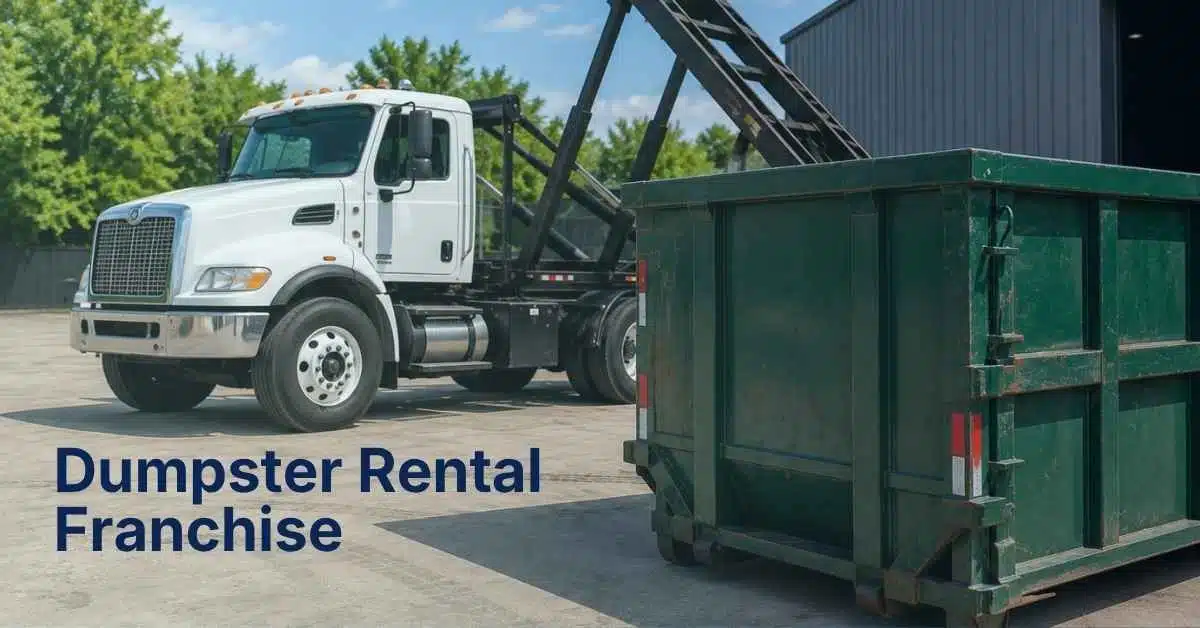
Yes, if you are the right buyer. The dumpster rental franchise sits in a large $77 billion North American Solid Waste Market ($77.40 billion in 2025, and forecasted to be $79.75 billion in 2026). There is strong demand for dumpster rentals due to construction growth, urbanization and stricter regulations on the way we dispose of our waste.
Franchise systems provide a proven business model, protect your territory and provide ongoing assistance. However, it does not eliminate the actual cost of purchasing, staffing and maintaining dumpsters and trucks.
Your profitability will depend on how well you manage the costs associated with each dumpster individually, rather than on how large an area you have to cover.
Here is the complete picture: what makes this work, what costs and risks exist that could cause this to fail, and answers directly to the questions that buyers ask most.
6 Reasons a Dumpster Rental Franchise Can Be a Good Investment
These six data-backed reasons explain why this model can work well for the right entrepreneur.
1. You’re Entering a $77 Billion, Growing Industry
The dumpster rental business has its roots in a large (over $77 billion) and growing solid waste industry.
Therefore, the dumpster rental industry will be able to ride alongside that growth and benefit from demand across the broader market, making it a strong franchise opportunity with brand recognition and an operational playbook.
This gives companies entering this space today the opportunity to enter an industry with many positive trends behind it and significant growth over the long term.
2. Demand Is Driven by Construction and Urbanization
Waste generation is a natural product of construction activities, and increasing demand for dumpster rentals follows from that. Therefore, many contractors rent dumpsters at each job site they work on. Additionally, urbanization creates another source of demand for dumpster rentals as cities develop, renovate, or construct new residential units.
This type of activity is less prone to sharp peaks and valleys based on market cycles. There will always be buildings under construction in a rapidly developing metropolitan area, and several factors support steady demand, so evaluating local market demand is essential when deciding whether a territory is attractive.
3. Environmental Regulations Are Pushing Growth Further
Green rules are one of the key factors boosting demand for efficient waste disposal solutions. So more debris moves into rented dumpsters. Less of it ends up in informal, illegal dumps.
Sustainability goals are also raising interest in dumpster rental services. After all, renting a dumpster beats hauling debris yourself in most cases. It’s the cleaner, safer choice for businesses and homeowners alike. In this industry, rules act as a tailwind, not a headwind, and one of the practical benefits is helping people stay compliant.
4. You Get a Proven Business Model, Not a Blank Slate
Franchising gives you a clear advantage over going independent: brand recognition and an operational playbook from day one. You skip the blank-slate startup phase. Most owners get comprehensive training that helps each franchisee handle pricing, routing, and dumpster placement.
They also get ongoing support from the team, including operational guidance. On top of that, franchisees usually get marketing help to launch faster. This all reflects the core duties of a franchise owner.
In short, you’re buying a proven franchise system with a ready-made framework you can operate within. That’s a real edge over sourcing dumpsters and building an independent business from scratch.
5. Protected Territories Limit Local Competition
Territory rights matter a lot for franchise success. In fact, a protected territory is a key edge franchising holds over solo operation, though an independent dumpster rental business can offer more flexibility in daily operations, and franchise drawbacks can include ongoing costs and operational restrictions.
Put simply: no one else in the system can place dumpsters in your area.
6. Multiple Customer Segments Mean Multiple Revenue Streams
Dumpster rental serves several customers at once: residential cleanouts, often alongside junk removal needs, commercial projects, and construction jobs. Each group rents for a different reason. So demand rarely dries up all at once.
That mix smooths out seasonal swings a single-segment business might feel more sharply. Ultimately, this varied demand is part of what makes the franchise model resilient, especially when serving those segments well depends on exceptional customer service.
What to Watch Out For: Costs and Risks
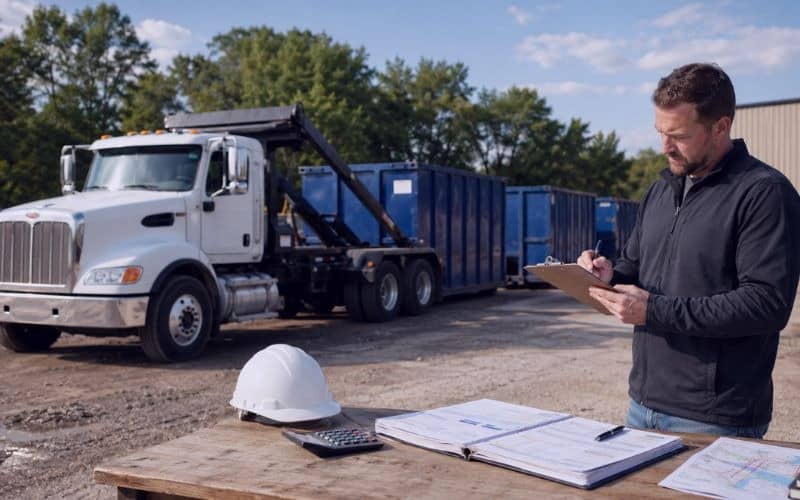
Every reason above comes with a cost or risk, including how franchise royalties work and affect your bottom line.
Startup and Ongoing Costs
Note: Figures below vary by brand, territory, and market. Confirm current numbers in a franchise’s Item 7 disclosure (FDD) before deciding.
Franchise fees typically run $29,000 to $50,000. Total investment ranges from about $120,000 for lean brands to $500,000 or more for truck-heavy models.
| Cost Item | Typical Range | Notes |
|---|---|---|
| Initial franchise fee | $29,000–$50,000 | Varies by brand and territory size |
| Total investment | $120,000–$500,000+ | Covers trucks, first dumpster fleet, and working capital |
| Roll-off truck (new) | $150,000–$250,000 | Used trucks run $80,000–$150,000 |
| Ongoing royalties | Percent of gross sales | Plus marketing fund contributions |
Franchisors must also give you a Franchise Disclosure Document (FDD): 23 required items, delivered at least 14 calendar days before you sign or pay any fee, under the FTC Franchise Rule.
Operational Risks to Plan For
You’ll need a secure yard and an ongoing budget for truck and container maintenance. Since costs vary so widely, per-dumpster economics matter more than the franchise fee alone. A detailed franchise business plan helps you stress-test those numbers before you commit.
Is a Dumpster Rental Franchise Actually Profitable?
Yes, when the per-dumpster math works. Profit is the gap between rental price and your hauling, tipping, and maintenance costs, not scale. Tipping fees vary by region, so check local rates first.
A steel roll-off dumpster gets reused across many cycles. Scheduling efficiency- how many dumpsters a truck drops off and picks up per day- drives profit more than any single number. Treat any estimate as a guide, not a promise.
What You Need to Get Started
Before investing, make sure you have:
- Enough startup capital: $10,000 usually isn’t enough. Franchise fees may start around $29,000, with total startup costs near $120,000.
- A CDL-qualified driver: Most dumpster trucks exceed 26,001 lbs and typically require a Class B CDL. Trailer setups may require Class A.
- Local disposal cost estimates: Check tipping fees in your area before setting rental prices.
- A solid scheduling plan: Efficient drop-offs, pickups, and routes can have a major impact on profit.
FAQs
Yes, when per-dumpster math works. After equipment, maintenance, and tipping fees, a durable, reusable dumpster can still generate healthy margins across many rental cycles.
Realistically, none. Franchise fees alone start near $29,000. That budget fits an application deposit instead, and starting as an independent operator may require less initial capital, but it does not include the same franchise support. Either way, focus on comparing support, costs, and flexibility while talking with current franchisees about real costs and support before you decide.
Almost always. Most trucks that haul dumpsters exceed 26,001 lbs GVWR. That triggers a Class B, or in some setups a Class A, commercial driver’s license.
Yes. The market is large and demand keeps growing. But your profit still depends on controlling costs and pricing your dumpsters right for your local market.
Bottom Line
A dumpster rental franchise can be a genuinely good investment and a strong franchise opportunity for the right buyer because support and scale can reduce some early risk. But go in with clear eyes on both sides. On one hand, you get a growing $77 billion industry. On the other, you take on real equipment, labor, and licensing costs.
Bin There Dump That has over 250 franchise locations and a super franchise support team, while MobileDumps gives franchisees a proven playbook and professional guidance.
Wondering whether a dumpster rental franchise fits your budget and goals? A franchise consultant at Franchisecoach offers a personal fit check. No brand pitch, just an honest read on your numbers.