
Absence doesn’t have to be an option with a franchise. While some franchises may require you to work “behind the counter” every day, solve the same staff problems every morning, or be at one location all the time, there is a better way.
The best franchise for absentee ownership operates a system using both managers and performance metrics to measure success, not on your daily involvement. That is why absentee ownership continues to appeal to many investors, busy professionals, and families looking to build wealth through smarter business ownership.
For entrepreneurs seeking flexibility, an absentee franchise can offer a path toward financial independence, personal freedom, and the ability to generate passive income over time. However, this ownership is only possible with a business model that allows for delegating responsibilities.
According to the International Franchise Association, regarding what factors buyers should evaluate which franchise to buy, buyers should look at how well the franchise operates. How profitable the franchise is economically and how well the franchisor supports each franchise owner.
This guide explains absentee ownership, distinguishes it from semi-absentee ownership and identifies the top 5 franchise categories in 2026 where a buyer can expect to find opportunities for hands-off growth.
What Is Absentee Ownership in Franchising?
The absentee model for franchise owners allows them to establish a franchise that operates as a self-sustaining entity, with no need for the owner to be involved in day-to-day operations.
An owner of this type of franchise does not take the same active approach to establishing the business, nor do they manage every aspect of each employee’s workday, nor will they handle customer complaints. Instead, they are viewed by investors passive owners.
It’s essential to know this before you invest in any franchise. “Passive” is one of the most used terms when it comes to marketing franchises.
While many franchises are advertised as being flexible, semi-passive, or absentee-friendly, less than a handful of franchises were created to be operated by an owner who will rarely, if ever, have to get involved with the day-to-day operation of the business.
Understanding the differences between the two types of franchises will help new owners avoid purchasing a business that may become just another full-time job.
The following are typically required for true absentee ownership:
- documented business operations
- a manager who can oversee daily operations
- Reliable reporting methods, including but not limited to point-of-sale (POS) systems and dashboards
- Strong customer relationship management
- Repeatable hiring, training and quality control processes
Absentee ownership without these documented requirements simply becomes a marketing term.
Semi-Absentee vs. Absentee Ownership: What’s the Difference?

Semi-absentee franchises are located between an active owner-operator, who is very involved in the operation of the business, and a true absentee investor, who has no involvement in the operation of the business.
A semi-absentee acts as a manager of managers by dedicating approximately 5 – 15 hours per week to overseeing their operation. This could include reviewing advertising, conducting regular financial meetings, approving hires, approving vendors, communicating directly with a general manager, etc.
Absentee owners are somewhat different in that they run their business much more as pure investors. The absentee owners will typically only dedicate 1 to 2 hours per week or possibly per month.
Reviewing their dashboard reports, income statement, annual revenues, major labor cost reports, and monthly or quarterly operational reports, with a completely separate management team running all of their day-to-day operations.
A 24-hour fitness center and many home services brands are good examples of semi-absentee opportunities rather than fully absentee models.
Over time, some investors use these absentee models to build multiple units, with the long-term goal of achieving financial independence and stepping away from active work entirely.
Ultimately, it is based on owner involvement:
- Semi-absentee ownership – ongoing weekly supervision
- Absentee ownership – review at a high level; no operational involvement
For most aspiring entrepreneurs, the best fit depends on lifestyle goals, management depth, and risk tolerance.
What Makes the Best Franchise for Absentee Ownership?
While there is no one-size-fits-all model for absentee franchises, many successful models have common features that make them more suitable for absentee ownership. These include:
Strong Customer Retention
Absentee business owners tend to do well in businesses where a customer comes back repeatedly because of how well the system operates, and not because they developed a relationship with the owner.
The businesses that generate a steady stream of income through a membership-based program, necessary service, or other forms of repeat business programs are likely to have more loyal customers and be more absentee-friendly.
Healthy ROI After Management Costs
An absentee franchise model that generates sufficient money to attract investors will require some form of management or labor costs.
If the business only works because the owner is filling labor gaps for free, it is not a strong absentee investment. Buyers should review financial considerations carefully, including manager compensation, local labor rates, and expected operational costs.
Family-Friendly Structure
The absentee structure of a family-owned business allows for creating a common family asset while allowing each member to remain in the background of day-to-day operations.
This reduces the amount of day-to-day stress associated with operating a small business, thereby increasing the ability to plan for multiple units, build long-term wealth, and have a better work-life balance.
Faster First-Year Profit Potential
Professional management, low overhead, standardized playbooks and comprehensive training allow some absentee models to grow faster than others.
That can reduce the expensive learning curve many first-time owner-operators experience and support a minimized risk.
Mobile or Location-Independent Potential
Because most mobile service concepts are location-independent and digitally managed, they are a good fit for an absentee model. Most mobile service concepts have lower overhead, less complicated staff needs, and better-defined key performance indicators that track performance.
Many categories exist within the realm of home maintenance, route-based services, and technology-enabled service brands that would lend themselves well to being managed as absentee models.
Quicker Break-Even Potential
Many franchises with higher ticket prices, more predictable/recurring income and fewer employees will have it easier reaching a point of breakeven than most retail establishments with large employee counts.
It is essential to evaluate the unit-level economics as well as the initial financial investment and the time commitment (management) before selecting a franchise.
10 Best Franchises for Absentee Ownership
Here are ten franchise categories that would be considered “best” to operate under an absentee owner. While each category provides some combination of scalability, management freedom and simple operation, they all differ in their overall approach.
1. Food and Beverage Vending Franchises
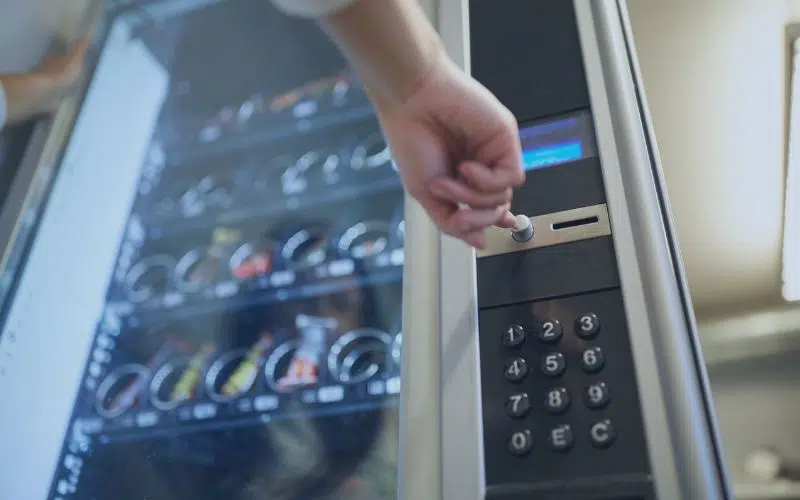
A food and beverage vending franchise is a particularly good fit for absentee ownership as the machine itself does most of the selling.
Rather than operating a retail storefront, the owner runs a route-based business where a technician or route manager makes servicing, restocking, and maintenance visits.
Vending machine concepts are a popular topic for discussions among investors considering low-labor franchise opportunities.
Why it works well for absentee ownership:
- There are many ways that this type of operation can be done with very few employees.
- Inventory Management & Route Planning have clear Standard Operating Procedures (SOPs).
- You will have remote access to a dashboard on how your machines are performing, and how much money you made in each location today, as well as daily sales reporting.
Since you do not need employees to work inside a storefront, you do not need to worry about employee labor costs when creating new locations or expanding into additional territory.
2. Laundry and Cleaning Service Franchises
Laundry & cleaning work best where it is process-driven and predictable – a laundromat or dry-cleaning model, or a cleaning service with set staff to clean set offices – with the owner able to manage schedules, quality and staff from afar, monitoring revenue from afar.
Key absentee franchise ownership advantages:
- essential, repeat-demand service with steady demand
- standardized operational procedures
- leaner staffed than typical restaurant or retail locations
- strong online monitoring using point of sale systems & reporting systems
- demand may also remain relatively consistent in some markets
This category can be especially appealing in markets where recurring service demand supports sustainable growth.
3. Pet Care and Wellness Franchises
Pet care franchise has become much more organized in recent years, making certain concepts surprisingly amenable to absentee ownership. Memberships, wellness plans, and repeat grooming visits can account for predictable revenue, while managers execute the day-to-day workflow.
This category stands out because:
- membership models drive recurring revenue
- SOPs drive consistency/safety
- managers can oversee staffing/ daily workflows
Owners can monitor occupancy/retention/labor KPIs remotely
The best operators in this space combine great training, customer retention and local marketing systems to make this model live long-term.
4. Automated Car Wash Franchises

Express automated car wash franchises tend to be among the strongest types of absentee ownership. It’s because most of the operations and success of the business are determined by how well you can run the machines at a high volume and have good overall maintenance, versus employee touch time.
The manager will be in charge of ensuring the site is running, looking clean (site presentation), managing inventory, and supervising employees; the owner will review all performance metrics.
What makes this business model attractive:
- high degree of automation
- low levels of staff in comparison to most retail operations
- subscription memberships may increase recurring revenue
- strong visibility into key performance indicators (KPI) such as car count, membership counts and utility usage.
- built for systems and repeatability
This will be one of the most scalable categories for buyers who have higher investment levels.
5. ATM Ownership Franchises
The franchise model of ATM ownership is typically viewed as one of the purest forms of absenteeism in that it has very little service. The business focuses on locating the ATMs at high traffic areas and managing the replenishment of cash, the uptime of each machine and transaction volume.
Best-fit features include:
- low staffing needs
- no overhead for storefront
- remote monitoring of cash levels and usage
- simple operational model
- ownership is naturally aligned with investor ownership
Investor ownership is often the best fit for a very simple reason: it’s a great absentee model and does not require much interaction with customers or employees. It can also be an attractive option when developing an investment portfolio.
6. E-commerce Store Franchises
An e-commerce franchise gives absentee owners a digital storefront rather than a physical one. In theory, that means fewer local labor issues and stronger location independence. Some models focus on online marketplaces, product sourcing, fulfillment, and digital performance tracking.
Absentee ownership of an e-commerce store creates a virtual storefront as opposed to a physical storefront. This is said to create fewer local labor issues, along with better control over locations.
These include, but are not limited to, utilizing marketplace platforms for products, purchasing those products from third-party vendors, fulfilling orders via those same vendors and third parties, and using digital metrics to measure performance.
Why do some investors like this model:
- no retail lease or public-facing storefront
- cloud-based dashboards for sales and inventory
- potential for location independence
- Third-party logistics can reduce operational burden
Things to watch closely:
- marketplace risk
- franchisor transparency
- product compliance and ad-spend economics
- management structure, actual operators behind the scenes
This is an area where due diligence, careful consideration, and review of market dynamics are critical. Buyers should analyze market conditions, quality of support, and whether the brand itself has an actual proven track record.
7. Fitness Center Franchises

The majority of people still consider fitness to be one of their top ways to gain access to semi-absentee franchise ownership and, in some cases, even absentee ownership.
A key factor contributing to its appeal is that memberships are generally recurring, with an ability to bill members repeatedly and allow managers to manage the day-to-day aspects of your facility (i.e., staff management, sales, etc.).
Absentee-friendly franchise strengths:
- recurring monthly membership revenue
- visibility into member signups, cancellations and utilization.
- ability to have a manager supervise employees, sales, cleaning and other aspects of managing a facility
- often lends itself very well to being used as a multi-unit growth strategy
However, due to the high level of involvement required by the owner to help establish the initial operating standards, it is also common for many to start off with a semi-absentee ownership model.
8. Salon Suite Franchises
The salon suite franchise model attracts investors for several reasons; most notably, it has a much smaller operational footprint than a typical salon.
The owner does not employ beauty service providers but instead rents out spaces (suites) to independent contractors who have complete control over how they run their respective businesses.
Why the salon suites business model fits absentee ownership:
- recurring rental income.
- very lean staffing model.
- no supervision of beauty service providers.
- remote ability to monitor occupancy and collections
- strong fit for executive-style ownership
The model is also very appealing to the buyer looking for passive income at lower day-to-day complexity.
9. Convenience Store Franchises
Absentee ownership for convenience store franchises may be possible; however, the operational needs for a franchise are higher than most other options that were listed.
The manager must have strong leadership skills to help manage the high volume of labor required in the form of inventory control, shrinkage control, and shift supervision.
What makes them work:
- An established method of operation exists for the location.
- Consistent local customer traffic will exist at the location.
- Back-office reporting from the franchisor provides detailed information to assist in controlling costs such as inventory and supplies.
Main challenge:
Clearly defined merchandising and inventory policies will provide the foundation needed by an absentee owner to effectively supervise his or her employees.
10. Travel Industry Franchises

As travel franchising has transitioned into a home-based or cloud-based model, many have developed the flexibility to allow for an absentee owner.
With this format, the service-based aspect of the franchise will also allow for digital monitoring by lead advisors, while also providing the investor with less overhead compared to most other brick-and-mortar opportunities.
Reasons this category can work:
- no storefront is required on many of these franchises
- digital customer relations management and booking tools are available on the cloud
- production can be overseen by managers/lead advisors.
- many have lower overhead costs than other brick-and-mortar franchises
- franchises can grow exponentially through their advisory network
For those seeking a flexible way to own a service-based business with lower overhead, this may be a good option.
Which Franchise Type Is Best for Absentee Owners?
If you want the most hands-off structure possible, ATM ownership, vending, and salon suites tend to be among the strongest options because they require less staffing and are easier to monitor remotely.
A stronger brand visibility and recurring revenue, automated car washes, fitness centers, and pet wellness franchises may offer more growth upside, though they usually require a stronger management layer.
The flexibility and low physical overhead are most important; travel franchises and certain e-commerce models can be appealing, but those categories demand more careful planning and due diligence, and a realistic review of support, margins, and staffing.
The right franchise depends on your:
- investment goals
- risk tolerance
- how involved you want to be as an owner
- the amount of money you want to invest
- the road you want to use to achieve your financial freedom
- the period of time you want to take to get there
There’s no one right answer. The best franchise fit is the one that aligns the economics of the brand with your lifestyle and long-term goals.
How to Evaluate the Best Franchise for Absentee Ownership
Before investing in a franchise opportunity, you should be able to answer each of the following questions:
- Does the franchisor explicitly state that they will allow for absentee or executive ownership?
- Can the business create sufficient income after paying the manager/operator's salary to generate acceptable returns?
- Are your day-to-day business operations sufficiently systematized so that another individual could manage them effectively while you are absent?
- What key performance Indicators (KPIs) and other measures of success can you measure from afar?
- How much involvement do you expect to have with your business during the first six to twelve months?
- Is the revenue recurring (e.g., subscription-based) or heavily dependent upon local sales?
- Would the Resale Value of the Franchise remain viable even if you were no longer actively involved in its operation?
- What are the franchise owner's obligations as described in the franchise disclosure document? What fees would you pay as a franchise owner? What operating requirements do you need to comply with?
- Is the initial investment reasonable when considering the working capital required to launch the business, and management payroll costs?
- Will the franchisor continue to offer ongoing support, marketing assistance, and industry-specific resources to aid you in running your new franchise business effectively?
These questions matter more than franchise marketing language. A concept may sound passive, but the real test is whether the business can function profitably without depending on you.
A strong buying process for the absentee franchise model should include:
- speaking with current franchise owners
- comparing and contrasting unit economics and balance sheets of the franchise
- knowing your local market context
- consulting industry experts where needed
- business brokers, if you’re comparing vs resale opportunities
- evaluating the entire process from onboarding to operations
That level of due diligence helps buyers make informed decisions and avoid costly mistakes that can affect long-term entrepreneurial success.
Frequently asked questions
The ideal absentee franchise has built-in operating systems, managerial support, and technology to track key performance indicators (KPIs) remotely.
Businesses like vending machines, ATMs, salon suite locations, and automated car washes typically require less daily owner involvement, making them a strong fit for absentee/executive style franchise ownership.
Yes. However, it does not mean all franchisors permit absentee/executive ownership.
The first step is always to verify whether the company you are interested in permits either type of ownership or then read your franchise disclosure document carefully to find out what specific obligations an owner has.
Typically, semi-absentee ownership implies that you spend approximately 5-15 hours/week managing your franchise or restaurant through a manager and checking on their performance.
On the other hand, absentee ownership is much more of a “hands off” approach as it primarily includes reviewing the finances, making high-level strategic decisions, etc., but typically no day-to-day involvement.
No, but an absentee franchise can be a good option to produce relatively passive income compared to owner/operator type business models, because the majority of work will be done by others. You will still need to have some oversight, report review, and make major decisions.
Look for strong SOPs, healthy margins after manager pay, recurring revenue, remote visibility into KPIs, strong support systems, comprehensive training, ongoing support, and a brand with a proven business model and proven track record.
If there are robust support systems, if they provide comprehensive training, if they continue to offer ongoing support and what type of business model has been established for the franchisor brand.
Final Thoughts
The best franchise for absentee ownership in 2026 is not the one that requires the least amount of owner time. It’s the right mix of systemization, operations run by managers, strong margins, and support from the franchisor.
For most buyers, semi-absentee franchise ownership makes the most sense as a 1st step. However, if your goal is time freedom for life, growth, and a path to scale and repeated success over time, getting involved with the best absentee franchise can be an ideal way to build wealth without being tied too tightly day-to-day.
When done well, absentee ownership can help ambitious buyers move closer to entrepreneurial dreams, financial freedom, and a more flexible future while allowing entrepreneurs to scale through systems rather than constant hustle.
Connect with FranchiseCoach Adam Goldman for expert guidance in identifying franchise opportunities built for semi-absentee or absentee ownership.