
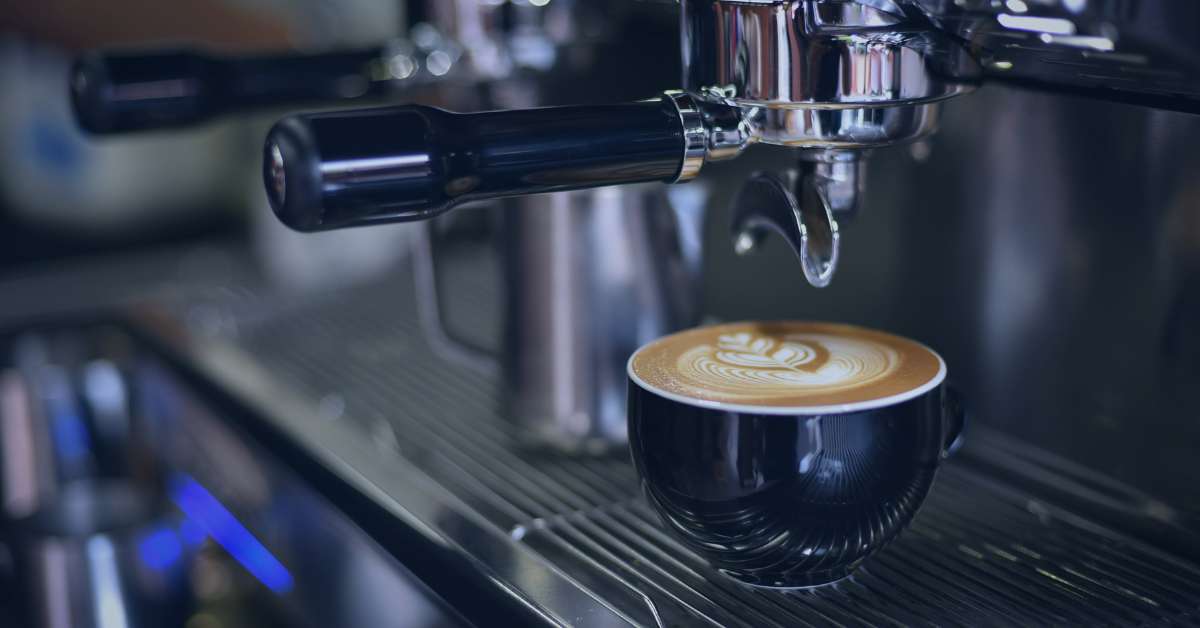
The coffee category is an enduring sector within the food service industry. Therefore, the opportunity for a new or established franchise owner in the coffee shop franchise area is significant.
The U.S. coffee franchise industry will have an estimated value of almost $14 billion by 2025.
At least one-third of all U.S. residents drink coffee every single day. On average, each resident of the United States spends over twenty dollars weekly purchasing coffee at a franchised establishment.
Long-term profitability, same-store sales growth, and owner success depend on site selection, product mix, inventory management, local demand, and how well franchisors support their franchise partners after opening.
When it comes to selecting the right coffee franchise in 2026, it’s going to be about more than just the name.
Why Coffee Shop Franchises Continue to Grow

Today’s major players are now generating additional revenue through a variety of other offerings, including baked goods, breakfast sandwiches, lunch options, energy drinks, cold beverages, and retail products such as mugs, blends of whole beans, and roasted coffee.
Successful coffee shops nowadays can serve customers at all times throughout their day. They can provide both morning and afternoon service for customers. From coffee houses to drive-thru kiosks, daily routines drive repeat visits, strong loyalty, and high sales frequency.
This ability to create a loyal customer base has made it possible for coffee shops, as well as other types of coffee outlets, to operate successfully.
Franchising allows you to take advantage of instantly recognized brand names. The benefits of using franchised name brands include instant curb appeal and trust from your target market.
Many franchise owners also claim they are able to make money in their first year of operation. The outcome will depend on many factors, and you should never assume a successful operation.
4 Coffee Franchise Models to Consider
The core formats in the coffee shop franchise world each have a different operating DNA. The best choice will depend upon your budget, the amount of time you can commit, what type of traffic patterns exist at the location, and your overall expansion plan.
1. Traditional Coffee Shop or Café Model
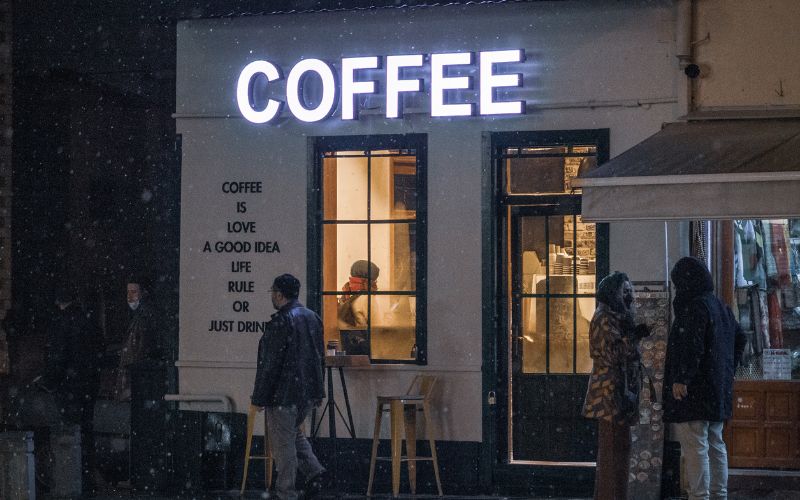
A traditional coffee shop or cafe is based on experience. It is the “third place” model: a location between home and work where customers gather, meet, study, relax, and enjoy a perfect cup in a comfortable setting.
The type of format depends on a larger menu item and a greater amount of in-store hospitality. Beyond offering premium coffee, operators serve espresso drinks, high-quality coffee, teas, pastries, sandwiches, salads, and other baked goods.
Cafes can be used for merchandise sales and high average ticket prices, as customers will remain at the location longer.
Some top brands in the cafe segment include PJs Coffee, Dunkin’, Corner Bakery, and Biggby Coffee. Strong café brands often build loyalty through more than just great coffee; these brands also have…
- active presence in the local community.
- providing financial support to schools.
- providing financial support to non-profits.
- charity initiatives that promote their image within the local communities in which they operate.
Best fit for: owners wanting to create a local destination which will be known for its local presence & also drive higher volume on their menus.
Key strengths: loyalty among customers, larger average ticket sales, can generate revenue from multiple day parts, and stronger in-store branded experience.
Challenges:
- higher labor requirements
- more complicated operational systems
- larger space requirements
- more expensive to construct
2. Drive-Thru Coffee Franchise

The drive-thru model has been growing at an incredible rate within the coffee industry. There is a strong trend for consumers to want convenience, and drive-thru coffee kiosks have been gaining traction across the country.
Drive-thru coffee franchisors tend to focus primarily on speed, throughput, and repeat morning customers. Scooter’s Coffee is commonly used as a prime example of this efficient format.
In addition to offering espresso-based drinks, cold brew, breakfast items, smoothies, and energy drinks, these locations have less interior space than traditional coffee shops.
Many drive-thru coffee franchises have lower overhead costs than a traditional coffee shop. They utilize smaller buildings, less labor, and fewer seats.
However, there are additional expenses related to drive-thru coffee franchises that include site planning, traffic engineering and lane design. Therefore, developing a location will likely be more complex.
Best fit for: Operators who are looking at providing high-speed service during peak hours, such as during rush hour or early in the morning, to provide convenience.
Key strengths: Convenience, possibly lower overhead, compact floor space, heavy commuter traffic.
Challenges:
- Site selection is critical
- Real estate can be complex
- Success depends heavily on throughput
3. Kiosk and Express Coffee Franchise
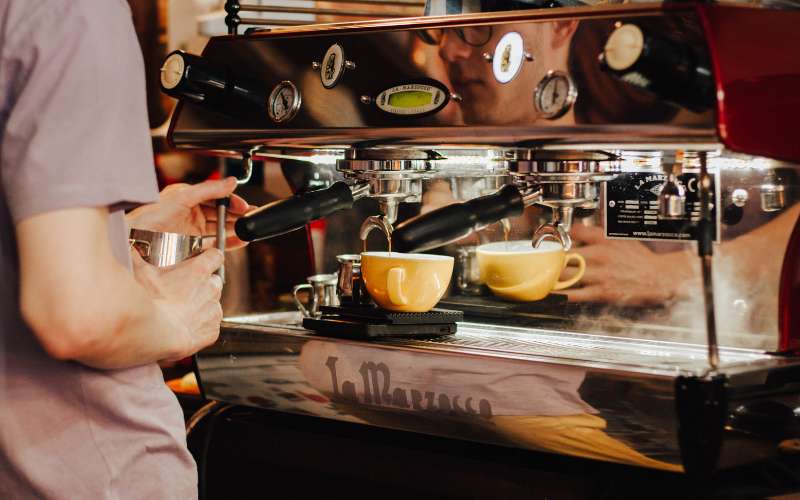
Airport, hospital, university, travel center, etc., locations provide a pre-existing demand for rapid service as they generate large numbers of travelers. The concept will be placed within an existing high-volume area; therefore, no initial demand creation by the operator will occur.
A franchise or kiosk format is ideal for businesses that are able to utilize their systems, menus, and distribution efficiently.
Due to the limited footprint, inventory control will become an important factor for operators. They will require careful forecasting, on-time delivery with the supplier, and adherence to a specific menu.
Best fit for: Owners who prefer smaller footprints and captive audiences.
Key strengths: Lower space needs, Impulse Purchases, Efficient Service Model.
Challenges:
- Limited storage
- Venue restrictions
- Dependence on host-site agreements.
4. Mobile Coffee Truck
This mobile concept is an excellent method to enter the coffee industry with a minimal amount of startup costs as it does away with typical real estate costs.
The mobile truck will operate in many areas where permanent storefronts would not; these may include sporting events, festivals, concerts, etc.
A mobile concept can be attractive for entrepreneurs who want lower fixed overhead and the ability to test demand before expanding into permanent franchise locations. This also allows for the creation of brand awareness among the local community.
Best fit for: owners who desire flexibility and a lower cost structure.
Key strengths: mobility, lower rent burden, event-based revenue streams, and easier market testing.
Challenges:
- Scheduling
- Weather exposure
- Event sales volatility
- Heavy owner involvement.
How to Choose the Right Coffee Franchise
Step 1: Calculate the Total Investment
Be clear about your full initial investment to invest in your new business before signing. The initial investment covers franchise fees, equipment, lease improvements, signage, inventory, marketing, permits, professional fees, and working capital.
Ask how much cash the franchisor expects you to keep on hand in addition to the startup total.
Don’t be fooled by low reported start-up costs. In some cases, those with low up-front fees may include high development costs, very strict supply chain requirements, and extremely high royalties.
Franchise owners who make smart decisions will first determine the expenses of an opportunity prior to making an agreement.
Step 2: Review the Franchise Disclosure Document
The Franchise Disclosure Document is one of the most important pieces of franchise information you will review. In addition, pay particular attention to:
- Item 19 financial performance representations are included
- Whether brand franchises charge franchise fees
- Whether brand franchises charge franchise fees
- Ongoing royalty fees and the mandatory contributions to the advertising funds
- Territorial rights and what type of exclusivity exists for each franchisee
- Terms for renewals of the franchise agreement
- Litigation history
- Transfer rights
- Recent store openings and closures
- Restrictions on suppliers and vendors
Step 3: Evaluate the Business Model and Unit Economics
A solid franchise system needs to be simple enough to describe and replicate easily. Ask what drives average sales, what products generate the best margin, and how the concept performs across multiple dayparts. A smart coffee concept does not rely on one rush period alone.
A well-designed coffee shop is a multi-peak operation where it creates demand through morning, mid-day, late-day beverages and add-ons.
Important questions include:
- What causes the average unit volume for most locations?
- What product(s) produce the largest gross margin?
- How many labor hours are required to run an efficient operation?
- What does a year-old location (mature unit) vs. a new location (first-year) look like as far as performance?
- How have same-store sales been trending for the company (the longer the trend, the better)?
- How long does it typically take for owners/operators to achieve break-even (or profitable)?
Not all answers need to provide the highest sales numbers, but rather provide a viable, healthy opportunity to obtain sustainable profits.
Step 4: Conduct Market Research
Regardless of how well-known a company name is to potential customers, there will always be local demand to be considered.
When conducting effective market research, it’s important to consider demographics, traffic counts, commute patterns, competition density, real estate costs, and customer behavior in your target area.
When evaluating a drive-thru, ingress/egress and morning traffic flow could be more important to consider. When evaluating a traditional café, foot traffic, seating demand, and nearby office or residential development may be more important.
Having good site development support from your franchisor can make a huge difference when evaluating these factors.
Step 5: Assess Training and Ongoing Support
One reason for an entrepreneur to opt for a coffee franchise versus starting their own business from scratch is the support provided by the franchise. Support from a franchise should be real, rather than simply stated.
Ask how the system supports its members in each area, including:
- Training (Initial)
- Opening day assistance
- Field operations visits
- Marketing assistance
- Inventory management systems
- Technology and point-of-sale guidance
- Hiring and labor planning
- Site development assistance
- Purchasing assistance
- Menu and product innovation
A strong brand will have the ability to offer long-term operational support, so that when market or economic changes occur, the owner has the tools to help them respond.
An ideal example would be a franchisor who offers great support on opening day, then does little else thereafter.
Step 6: Consider Scalability
Some business concepts will be better at expanding into multiple units than others.
Whether you want to create a single location of a unique coffee shop versus having many different locations, a small footprint like a kiosk or drive-thru can be easier to duplicate and grow as a multi-unit operation.
You should look at how existing unit owners in the system have grown. A franchise with a strong training program, low labor costs, high sales, and robust support can expand more easily than one dependent on the owner’s charisma.
Step 7: Compare the Brand’s Reputation and Product Quality
Convenience is what brings consumers to a store at first; it is quality that brings them back. When there are as many stores competing for customers as in our category of specialty coffee, quality is everything. It’s not just about having good quality coffee when you serve it.
High quality can be defined by quality coffee beans, quality roast, or serving consistent quality beverages consistently. Quality can also be defined by training baristas, providing signature drinks, etc.
The brand that evaluates its system based on these factors will have a loyal customer base due to taste and will have a competitive advantage over other similar competitors.
Risk Factors Every Prospective Franchisee Should Understand
A coffee franchise can be a strong business idea, but it is still a real investment with meaningful risk.
Every single franchise owner does not succeed, and no franchiser can ever take away the ability for you as the owner to make mistakes with respect to how you run your business financially or operationally.
Common risks include:
- Site selection failure
- Under-capitalizing (lack of funds) for a start-up
- Difficulty finding labor at a reasonable cost
- Increasing costs of food & beverages
- Ineffective marketing in the local area.
- Reduced traffic during seasonal periods
- Pressure from debt obligations (loan payments)
- Ineffectively executing the system
- Poor performance by the franchisor
- An excessive number of franchises competing in your geographic territory
FAQs
Many of these business owners see a coffee shop as a less risky venture than establishing their own independently owned coffee shop. In addition to this, most franchises have established brands that consumers recognize and frequent. Many also provide support for new franchisees through ongoing training and assistance.
Most systems charge royalty fees, and many also require ad fund contributions. The way that they charge their royalties may vary depending on which company you are working with. So, make sure you check the Franchise Disclosure Document before signing up for a franchise.
Yes, it can be. While there could be additional costs involved with building out a new location as far as development goes, the overall operating expenses of most drive-thru coffee franchises are less expensive than the average operating expenses of a traditional coffee shop.
This is largely because of smaller footprints and fewer tables.
Yes. Any successful coffee franchisor that demonstrates well-developed unit economics, solid operational discipline, high average store volume sales per day, and consistent and repeatable support systems will have the potential to be scalable – particularly for those wanting to open several stores.
Some well-established names in this space include Dunkin’, Corner Bakery, Biggby Coffee, PJ’s Coffee, and Scooter’s Coffee. The models each operate under, as well as their footprints and positions within the market, vary greatly; they need to be compared individually rather than on brand recognition alone.
Final Thoughts
The right coffee franchise opportunity can give aspiring owners access to a proven system, recognized branding, structured training, and strong support in a category with durable consumer demand.
If you’re exploring beyond coffee, see our guide “14 Most Profitable Franchises To Own in 2026” to compare top-performing franchise opportunities across industries.
Your dream could be developing a comfortable neighborhood coffee shop, establishing a fast-paced drive-thru, creating an express kiosk, or even developing a mobile coffee concept. In today’s marketplace, there are many opportunities to develop a meaningful coffee business.
Successful entrepreneurs who operate franchises are not just selling coffee. They are serving customers; they are earning trust from their community by consistently producing quality products; and they are providing a daily experience that encourages repeated visits.
Are you ready to take the next step? Let’s get down to the bottom line (coffee). Talk to a franchise consultant today to find out which coffee shop franchise opportunity is best suited to meet your needs.