
A cleaning franchise in 2026 is a service-based investment built on recurring, contract-driven revenue, with typical initial franchise fees of $20,000 to $50,000 and total startup costs between $3,000 and $100,000 or more. The category is considered recession-resistant, since commercial cleaning stays necessary even when budgets tighten elsewhere.
This guide breaks down why serious investors are choosing cleaning franchises in 2026, the different segments within the industry, and what to actually weigh before buying in.
Why Professional Investors Are Choosing Cleaning in 2026
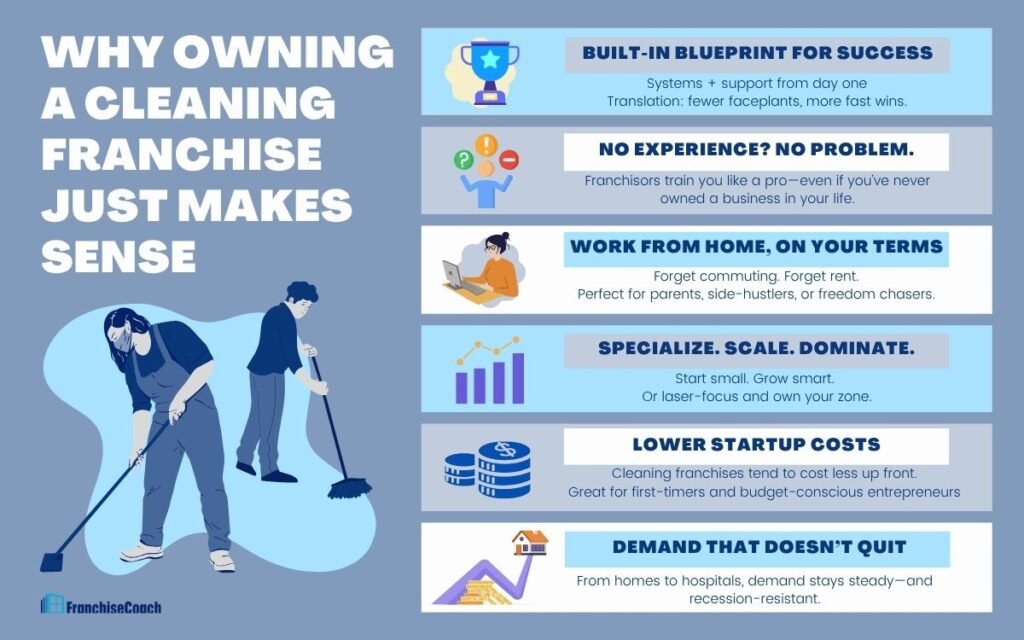
Commercial cleaning is considered essential rather than discretionary, which gives cleaning franchise owners consistent demand, repeat customers, and stable contract values even during economic uncertainty. Office tenants, schools, hospitals, and property managers rarely cut cleaning from their budgets, even when they cut elsewhere.
That stability is why commercial cleaning franchises appeal to investors looking for predictable, contracted revenue rather than one-off transactions. For a broader look at this kind of recurring-demand model, see our guide on B2B franchises and their competitive advantages.
The Market Reality
The commercial cleaning industry is highly segmented, which creates room for local companies to grow. This type of business also tends to benefit from longer-term contracts tied to essential facilities, rather than discretionary spending that gets cut first in a downturn.
Why this Model is Unique
Many commercial clients sign repeat contracts for extended periods, with consistent billing. That creates a known income stream and much clearer cash flow forecasting than a project-based business. It also lets franchisees grow their accounts over time instead of chasing a new client for every job.
Proven Longevity
A franchise gives you a system, a process, and a standard for running the business, which lowers your risk as a new owner. Many investors pay a premium for an established franchise specifically because it reduces the uncertainty that comes with starting from scratch.
Technology and Service Change
Heading into 2026, top cleaning franchises use route planning technology, digital reporting systems, labor scheduling tools, and modern electrostatic disinfectant treatment. The electrostatic method adds a positive charge to the cleaning solution, letting it wrap around and cover surfaces more completely, and has gained popularity following recent health crises.
These modern practices help owners improve service consistency, client retention, and how clients perceive the quality of their service.
Exploring the Cleaning Franchise Landscape
Today’s cleaning franchise market spans commercial, residential, and specialty or niche service models, giving investors flexibility based on budget, lifestyle, and growth goals. If you’re weighing cleaning against other categories, see our guide on 14 most profitable franchises to own in 2026.
1. Commercial Cleaning Franchise Business
The commercial model suits investors who want contractual income and a larger-scale service business. It typically involves regular visits, routine facility maintenance, and account retention.
Where commercial cleaning focuses
- Office buildings
- Schools
- Health care facilities
- Industrial properties
- Shared office space
Why Investors Like This Segment
- Recurring contracts
- Demand from institutional clients
- Expansion opportunities by adding accounts
- Systems already in place through an established brand
- Growth potential across territories & teams
This segment is the heart of commercial cleaning franchising, combining operational structure with steady, repeated client demand.
2. Residential Cleaning

Residential cleaning focuses on homes, condos, and specialty services like carpet cleaning. This format offers a flexible entry point, with lower overhead and growth that’s largely owner-driven.
Considerations for residential cleaning buyers:
- Easier entry for first-time operators
- Demand from both households and property managers
- Ability to build at your own pace
- More control over your own schedule
Many residential cleaning franchises are available as home-based opportunities, letting new owners start with less upfront capital while running daily operations from home. Read more in our guide to 23 low-cost home service franchise ideas.
3. Specialized & Niche Services
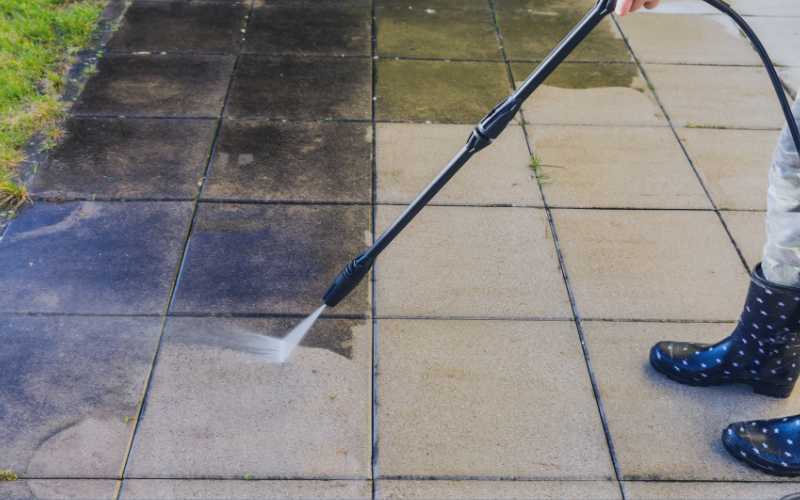
Beyond traditional janitorial work, specialty cleaning franchises focus on specific niches, like pet-waste cleanup or grill cleaning.
Specialty categories include:
- Carpet cleaning
- Floor care
- Window cleaning
- Pressure washing
- Post construction cleanup
- Sanitation and disinfecting services
- Pet waste removal
- Grill cleaning
Floor and carpet cleaning has historically made up a meaningful share of total cleaning industry revenue, making it one of the more established specialty niches. Window cleaning also draws consistent interest thanks to its visibility and simplicity as a recognizable, repeatable service.
The 2026 Investment Snapshot
For most investors, the relationship between entry cost and ROI is one of the most compelling parts of cleaning franchising, since the category spans models built for owner-operators, executive owners, and multi-unit expansion.
| Investment Component | 2026 Industry Average | Investor Target |
|---|---|---|
| Initial Franchise Fee | $20,000 – $50,000 | Look for “Veteran” or “First-Responder” discounts |
| Total Startup Costs | $3,000 – $100,000+ | Includes initial advertising & working capital |
| Cash Required (Liquid) | $10,000 – $40,000 | Varies by unit franchisees vs. master franchisee |
| Average Net Profit Margin | 15% to 28% | Specialty services tend to hit the 20-28% range |
Note: Don’t judge a franchise by the franchise fee alone. Review the Franchise Disclosure Document (FDD) closely for any “technology surcharge” and confirm what labor-efficiency improvement it’s actually tied to, rather than taking it at face value.
What Investors Need to Consider
- Initial franchise fee
- Total startup costs
- Recurring royalties and marketing obligations
- Equipment needs,
- Labor requirements
- Territory rights
- Client acquisition systems.
- Training and ongoing operational support
Some franchises keep initial investment low through van-based or home-based models. Others require more capital in exchange for a larger territory and a more developed sales process with an existing customer base.
Franchisee Tip: Before paying any franchise fee, read the entire Franchise Disclosure Document for the opportunity you’re considering. The FDD covers your legal obligations, renewal options, financial obligations, operating restrictions, potential earnings, and ongoing support. This is also how you compare an established national system to a newer national brand or a local operator.
7 Strategic Pillars for 2026 Success
Before choosing a commercial cleaning franchise, check whether it delivers on these seven areas:
- 1. Wellness and compliance. Can the system sanitize effectively and support regulated environments like schools and medical facilities?
- 2. Training programs. Does the franchisor offer real, hands-on training on equipment, quoting, compliance, and account management?
- 3. Technology in daily operations. Is scheduling, inspection, and reporting built into the system to help you run more efficiently?
- 4. Staffing and labor support. Will the franchisor help you hire, train, and retain employees, especially given how labor-sensitive this industry is?
- 5. Sales, support, and resources. Does the brand provide ongoing sales tools and local marketing support through launch and beyond?
- 6. Scalability. Can you grow from one owner-operator to multiple crews and accounts over time?
- 7. Brand reputation and service quality. Does the brand consistently deliver reliable, measurable results that clients actually notice?
The best-performing franchisees aren’t just buying a name. They’re buying a full system of support and a proven business model built for growth.
Frequently asked questions
It can be, largely because commercial cleaning demand tends to hold steady even during economic downturns. Recurring contracts and institutional clients give this segment more revenue predictability than many other franchise categories.
No. Most cleaning franchisors provide the training and systems needed to run the business, even for owners without a cleaning background. What matters more is your ability to manage operations, staff, and client relationships.
Yes. Many residential and specialty cleaning franchises operate as home-based businesses, which lowers upfront capital needs and lets owners run daily operations from home.
Commercial cleaning tied to essential facilities like schools and healthcare stays consistently in demand. Specialty niches like sanitation and disinfecting services have also grown, driven by heightened attention to cleanliness in shared spaces.
Cleaning franchises combine relatively low startup costs, recurring contract-based revenue, and a business that’s considered essential rather than optional, a combination that’s harder to find in many other franchise categories.
Securing Your Future Through Franchise Ownership
Franchise ownership in cleaning gives you more than a flexible schedule. A strong service category means a reliable revenue base from ongoing contracts, real scalability, and the potential to build long-term wealth, whether you go commercial, residential, or specialty.
The most effective cleaning franchises typically combine brand recognition, a proven business model, comprehensive training programs, strong ongoing support, clear resources, a sensible cost structure, recurring revenue potential, and a relatively low initial investment compared to many other franchise categories.
Adam Goldman and the FranchiseCoach team can help you find a cleaning franchise brand that fits your lifestyle and financial goals, whether that’s commercial, residential, or a specialty niche. Contact FranchiseCoach to get started.