
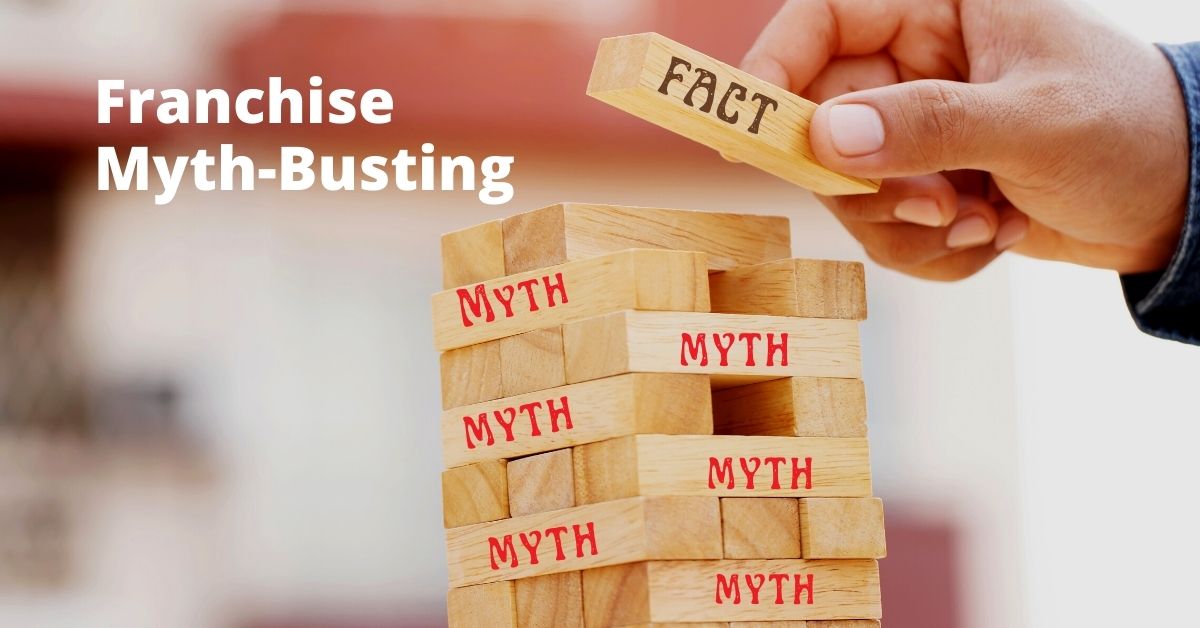
In the world of business ownership, knowledge is your nuts-and-bolts. If you want to manage a franchise business effectively, you have to start with a clear head. That’s why franchise myth busting is so important for aspiring franchise owners exploring business opportunities.
Many new entrepreneurs begin their investigation process only to be bombarded by “hearsay” and common franchise myths. These rumors often masquerade as facts, causing potential franchise owners to doubt one of the most misunderstood paths to success.
The data shows otherwise: 20% of start-ups do not survive the first year, while only about 50% of start-ups will reach 5 years. On the other hand, only 4% of all franchises fail by the end of the fifth year. This indicates that purchasing a franchise has far fewer risks involved compared to creating a brand-new business.
What is Franchise Myth-Busting?
Franchise Myths vs Reality. A number of people have misconceptions about how franchises work. The goal of debunking these myths is to separate fiction from fact that may harm the perception of franchise opportunities by the public.
Franchise myths are poisonous to every potential franchisee’s mind. The lies that have developed into threats and challenges for franchise growth include the following misconceptions about:
- Myth-Busting on how successful franchisees operate.
- Myth-Busting on why some business owners get frustrated.
- Each motive of all franchisors
- Success claims about the franchise business score
- Reasons for which a company must implement continuous fees
Top 13 Myths in Franchising
To help you make an informed decision, let’s sort the reality from the noise.
1. You will fail without experience in franchising
While experience can help, it is NOT required for your success as a franchisee. Many very successful franchise owners have had their start in other areas such as the trades, health care, education, or the military.
Proven business models and extensive training by the franchisor are provided to teach you how to run a franchise. You do not require prior experience within the franchise community; you simply need to be willing to learn.
2. The most well-known company is the best one to franchise
A high-profile name is fantastic for attracting attention. However, success as a franchisee has more to do with managing your business and executing the established system than simply relying upon the prestige of a prominent name.
The success of your franchise units will depend on whether or not you can successfully execute the proven systems and understand your regional marketplace.
3. It is more expensive to buy a franchise than to own a business
Most individuals believe owning a franchise is limited to the super-rich. Many options exist at low levels to begin a franchise. With a franchise model, you are paying for an established brand and supply chain management, which helps mitigate risk and avoids the cost of reinventing the wheel.
When buying into a franchise, the owner is essentially purchasing an existing brand, along with an entire system for managing inventory and supply chains. These tools help eliminate the risks associated with creating and marketing a completely new business.
4. Company owners are just interested in money-making
You may be able to view franchise royalty as nothing but “money-making” for the owner of the franchise. The International Franchise Association says that this isn’t entirely true.
Their revenue model relies on ongoing royalties from successful franchise operations. This means if you aren’t succeeding, the owner won’t either. These fees also fund national advertising, provide continued support to your business, and fund brand standards.
5. “Being your own boss” is only applicable to franchisors
Some believe the franchisor runs everything and the franchisee is just a glorified manager. While you will have to adhere to the terms of the franchise contract and very specific brand standards, you will still be in control.
You are your own business owner and are accountable for all aspects of operating the business daily, including hiring employees and payroll. You get the structured path of a franchise while remaining a locally owned entity.
6. Expertise in a certain business type is a key to success
There are many ways to achieve expertise in a specific area of business, i.e., successful franchise owners do not have to be a mechanic to own an automotive franchise or a chef to operate a fast-food unit.
A successful franchise owner needs to have a strong work ethic, emotional intelligence, and the ability to lead people. Many franchise offers provide the “playbook”; you just need the fresh ideas and resilience to execute it.
7. Franchisees who succeeded are in good locations
In addition to being located well, having that great location can be a benefit, but it’s no magic wand. Franchisees remain responsible for driving customers through local marketing creativity.
Even with the best spot, you must stay hands-on to ensure the service is top-notch and the fitness plan for your business stays on track.
8. To be a top franchisee, you must be a degree holder
To be at the top of your franchise, you have to be educated with a degree.
Many business owners find that their “street smarts” and ability to follow a structured path are far more valuable than a diploma. Businesspeople can often learn from experience street smart and being able to adhere to a defined plan is equally important.
The training provided by the franchise business model is designed to bridge any educational gaps.
9. Franchising means the business can make good money by itself
One of the biggest myths is that a franchise makes money by itself. Franchising is not a passive income opportunity. It requires active involvement, especially in the early stages. You can’t just “sit back”; you need to oversee the day-to-day operations to ensure the success of the brand.
Grow your business strongly by being hands-on with it, even showing up every day in a short time.
10. A franchisee has no freedom in franchising
A franchisee does not have complete freedom within franchising, but they do have an amount of autonomy that most corporate employees wish they had.
You get to be able to grow your business at multiple locations and create a legacy for yourself. The model isn’t new; you’re simply taking it over.
And as an added benefit, the franchisee will also receive unlimited PTOs. This quality of work-life balance is rarely found in all office jobs.
11. Franchise businesses eat all your time and effort
The “hustle” is very real, but how long you hustle changes. Successful franchise ownership typically moves through three phases: Owner-operator Stage, highly involved, manager-led stage, less involved, and multi-unit executive stage, even less involved.
12. Franchise opportunities are for gutless
Some think new entrepreneurs who choose a franchise are “playing it safe.” The truth is, putting money into a brand-new venture always involves fear. Whether it’s fast food, home services, or pet care, it takes courage to put yourself in the driver’s seat.
13. Purchasing franchise brands is a sure success
There is no such thing as a risk-free investment. The same holds for your success as it relates to managing your money, your finances, how quickly you achieve breakeven, and what type of competition exists locally.
It would be incorrect to assume that relying exclusively on the franchisor’s playbook creates a completely “risk-free” situation. Ultimately, you are still the one calling the shots, the game player versus someone who just watches as a spectator.
Making an Informed Decision
Busting common myths is the first step toward franchise success. Before investing in a franchise opportunity, the prospective investor needs to review the Franchise Disclosure Document (FDD) so they understand what costs are involved as well as their obligations.
Rather than entertaining the latest stories or “hearsays,” focus on the reality of the legal documents and talk to many franchise owners already in the system. Learn about the specifics of the franchise agreement through reviewing the contracts and speaking with numerous other current franchisees within the same franchise system.
There are franchises available in every business category, from fitness centers to educational institutions. Therefore, locate the one that aligns with your business objectives.
FAQs
No. While experience can help, most franchisors provide structured training and ongoing support. Debunking many myths about franchising starts with realizing that successful owners often come from unrelated industries such as healthcare, education, trades, or the military.
Not necessarily. Brand recognition helps, but success depends more on location execution, following systems, and strong local management rather than fame alone.
Franchise costs differ greatly. Although you will have to pay some cost at first, this is generally much less than the cost of finding out what doesn’t work by trial-and-error when you begin from scratch. You can find more articles on our site that break down these financial comparisons in detail.
No. A franchisor depends upon the successful operation of its franchises for continued long-term revenue. The reason why most franchisors offer support systems (i.e., employee training, marketing) etc. is to assist franchise owners’ successful operations.
Yes, but within a structured system. You operate independently in daily management but must follow brand standards and operational guidelines.
Conclusion
The franchise industry provides many people with a chance to start their own businesses and realize their dreams. At the same time, however, some will never want to invest in a franchise.
The myths that have been discussed previously could cause the truth of what franchising has to offer, true freedom and good financial security, to be lost. When you locate the correct franchise business for you, don’t allow some rumors to keep you from leaving the corporate world and being your own boss.
Are you ready to differentiate fact from fiction and begin your new career? If so, contact us at FranchiseCoach to get professional help in selecting an appropriate opportunity for your future!